|
Black Tie
International Magazine China 1
2 3
4 |
|
Share this page with your friends |
|
|
www.blacktiemagazine.com
The Aspiration and Vision of The Haier Way |
|
|
 |
|
|
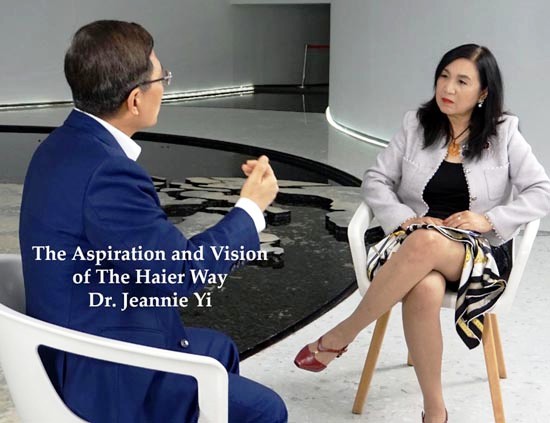
The Aspiration and Vision of The Haier
Way
Dr Jeannie Yi |
|
|
|
|
|
|
|
The Haier Way II is not a book about the
past. It adopts a forward-focused
structure: 10% reviewing history, 40%
documenting the present, and 50%
envisioning the future. It serves as a
global declaration and builds solid
trust for Haier among Wall Street and
Silicon Valley.
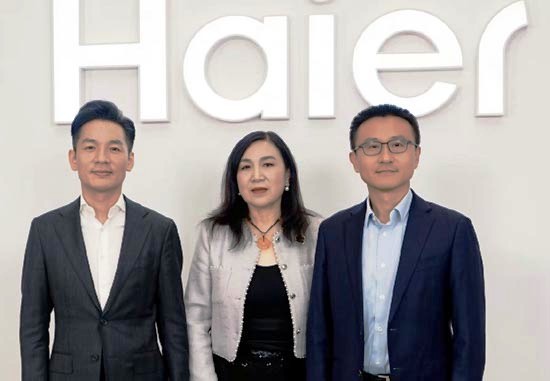
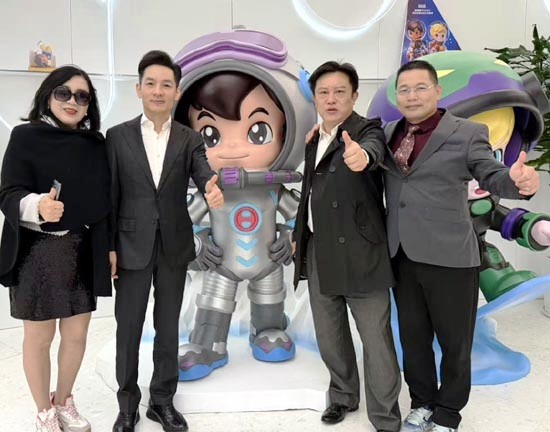
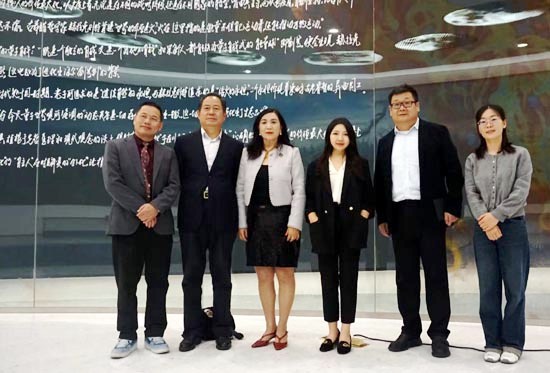
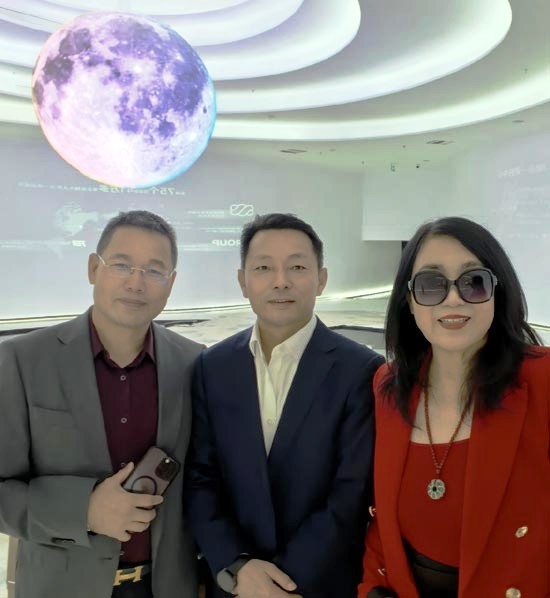
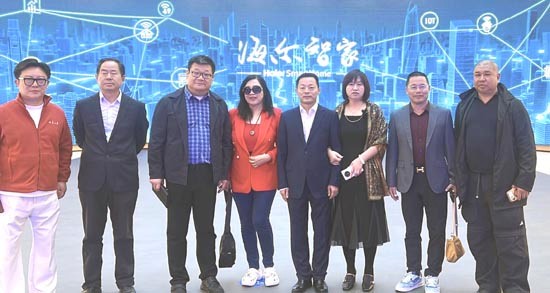
On the last week of October I invited
eight close friends and business
partners to Qingdao to witness and
record Haier’s transformative new
chapter. This journey reminds me of my
first Haier visit in 2003, when I
completed the manuscript with unshakable
faith.
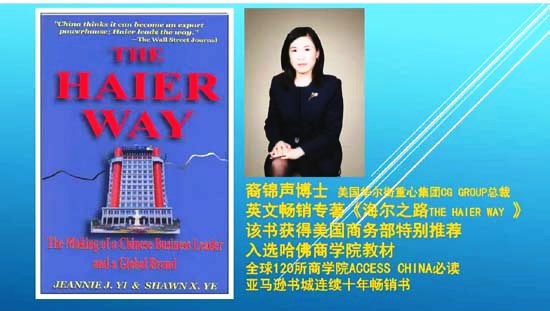
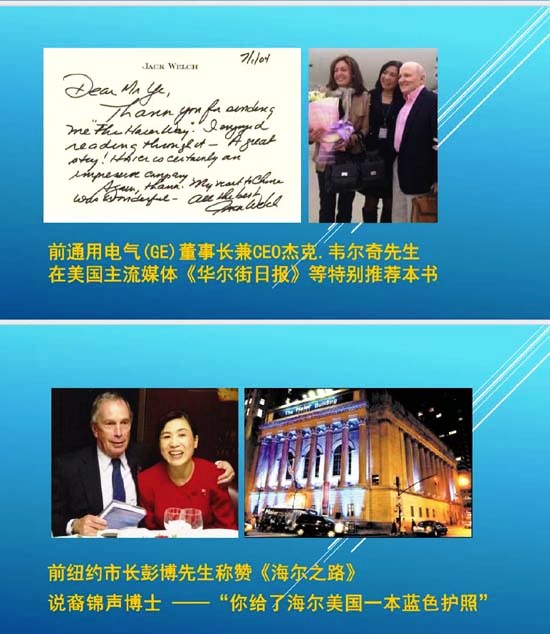
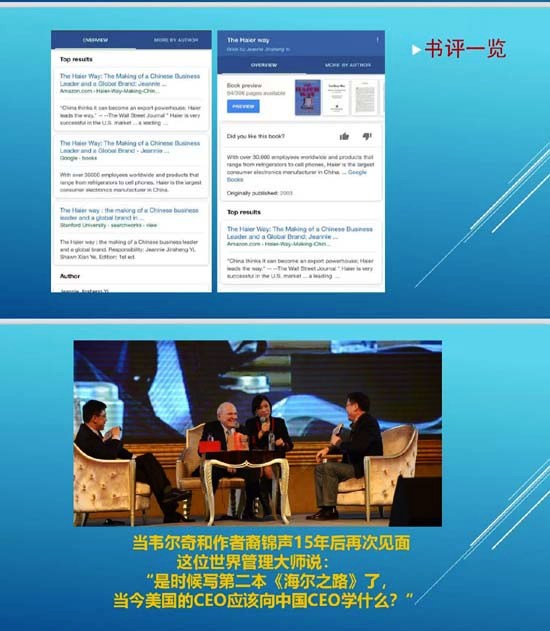
Despite doubts from academia, my
firsthand observation convinced even
Jack Welch, who recommended the book to
The Wall Street Journal without meeting
me. That became legendary.
Decades later, my conviction remains
firm. Twenty to thirty years from now,
readers will recognize that we witnessed
a historic AI revolution taking shape at
Haier. Today’s AI transformation is
vibrant, unstoppable, and
epoch-defining.
Haier’s growth carries two generations
of extraordinary vision.
Zhang Ruimin pioneered Haier’s global
rise, building China’s first world-class
home appliance brand and opening the
door for Chinese enterprises to go
global.
Zhou Yunjie leads Haier’s new era of
innovation. Facing an entirely new,
complex global landscape, he seizes the
AI opportunity, rebuilds Haier through
industrial Internet and intelligent
technology, and opens a new blueprint
for humanity-oriented industrial
upgrading.
Unique among Chinese enterprises,
Haier’s 1984 collectively-owned model
has independently evolved for four
decades, creating a distinctive
development path beyond state-owned or
private frameworks.
Haier’s past mission was to build a
global brand from China.
Haier’s future mission under Zhou Yunjie
is to create AI-powered products and
better lifestyles for all humanity,
based on its proven Rendanheyi
people-value-aligned model.
Written in a modern, accessible style
suited for today’s AI and digital era,
this book opens a global window to
understand Haier’s ongoing
transformation and infinite future
potential.
It also lays the foundation for a
special-purpose fund. Backed by Zhang
Jiahao’s strategic vision and capital
influence, Haier will attract global
investment and complete its crucial
18-month strategic upgrade.
As a national enterprise benchmark
alongside Huawei, Haier’s unique
“salad-style” global culture and decades
of cross-cultural resilience have
overcome countless geopolitical and
global challenges.
By
leveraging our long-established Wall
Street and U.S. corporate resources,
Haier’s AI ecosystem will deliver
universal human value and bring generous
returns to all partners. This represents
the ultimate embodiment of Rendanheyi.
This book is a timeless declaration.
What we witness today and what Zhou
Yunjie envisions now will become the
cornerstone of humanity’s intelligent
future
for decades to come.
Let humanity ring! |
|
|
 |
|
|
 |
|
|
 |
|
|
 |
|
|
|
|
 |
|
|
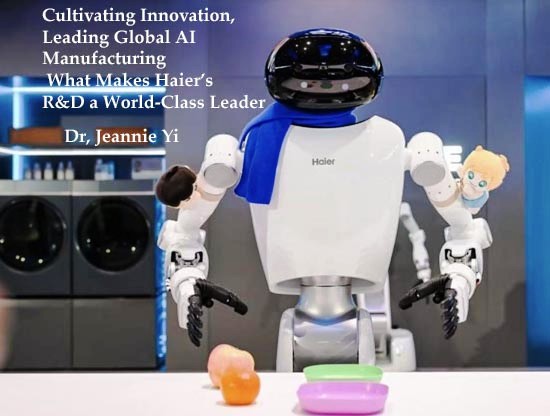
Cultivating Innovation,
Leading Global AI Manufacturing
What Makes Haier’s R&D a World-Class Leader
Dr. Jeannie Yi |
|
|
|
Haier Group has long been at the
forefront of the global home appliance
and smart home sectors, holding the
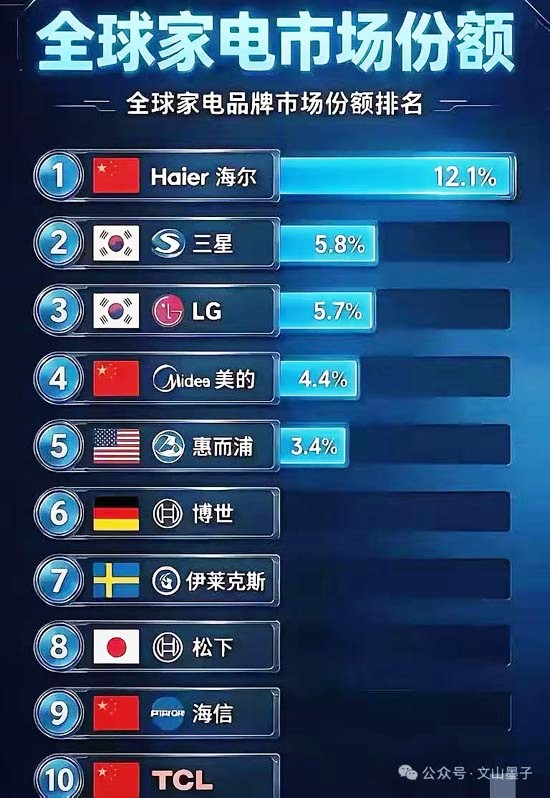
world’s No.1 share in major home
appliances for 17 consecutive years.
Such remarkable achievements are no
stroke of market luck.
They stem from decades of robust R&D
strength rooted in user needs and
oriented toward the future. Unlike
traditional enterprises that follow
innovation trends passively, Haier has
built an open, efficient, continuously
self-upgrading in-house R&D system.
With substantial investment, solid
technologies and premium products, it
maintains its leading position in global
R&D.
At the heart of Haier’s R&D strategy lie
user-centricity, global collaboration
and full AI empowerment, breaking away
from the closed-door R&D model of
conventional labs.
First, Haier has developed its exclusive
“10+N” global open innovation ecosystem,
integrated with the online HOPE
innovation platform.
It
connects more than 250,000 technical
specialists worldwide and millions of
R&D resources, supported by 28,000
full-time R&D engineers, forming a
global innovation network. R&D hubs
across the globe capture local demands
and conduct on-site development —
whether energy-saving requirements in
Europe, smart-scenario demands in North
America, or household habits in Asia.
This enables Haier to pool global wisdom
for global users.
Meanwhile, Haier sustains heavy,
consistent R&D investment with annual
spending at the billion-RMB level.
One
third of these funds are dedicated to
green and low-carbon technologies,
aligning with global environmental
priorities.
Today, Haier fully embraces AI
innovation. Powered by its
self-developed smart home foundation
model and AI Eye 2.0, its R&D has
shifted from manual iteration to
intelligent evolution.
Super agents empower the entire R&D
workflow, drastically cutting cycles for
technical breakthroughs and product
updates, making innovation more precise
and efficient.
This deep-rooted R&D model delivers
tangible innovations that reach and
benefit end users.
Technically,
Haier holds 42,000 global invention
patents for smart homes, ranking first
globally for 15 straight years.
It has won 18 National Science and
Technology Progress Awards and 13 China
Patent Gold Awards, and led or
participated in formulating 146
international standards, achieving four
global No.1s in standards, patents and
design.
On the product side, original
breakthrough technologies keep emerging:
its partition-wash three-tub washing
machine saves water and power while
offering efficient sterilization,
selling over 400,000 units within nine
months of launch.
Its suite of L4-level smart home
appliances can sense surroundings and
provide autonomous services. The premium
Casarte series, backed by proprietary
core technologies, has topped China’s
high-end home appliance market for a
decade.
In manufacturing, Haier runs 14 global
Lighthouse Factories — the largest and
most diverse portfolio of lighthouse
factories worldwide — building a
top-tier digital smart manufacturing
system.
Comprehensive technological accumulation
has secured Haier’s irreplaceable global
leadership.
Within the industry, Haier stands as an
innovation benchmark for smart homes,
green appliances and intelligent
manufacturing.
Many of its original technologies fill
industry gaps, and its standards have
become globally accepted norms |
|
|
 |
|
|
 |
|
|
|
|
 |
|
|
From a Corner of Best Buy to the Dinner
Table
Haier’s Journey into American Life
By Dr. Jeannie Yi
September 24, 2026
Today, September 24, 2026, I am watching
television as American news coverage
turns to the U.S.–China summit between
Xi Jinping and Donald Trump. Listening
to the discussions about our two
countries, I find myself reflecting on a
story I witnessed firsthand: how Haier,
one of China’s leading brands, found its
way into American life.
For me, that story comes back to a
crowded room at Columbia University, an
air conditioner in a corner of Best Buy,
and
a little red ribbon.
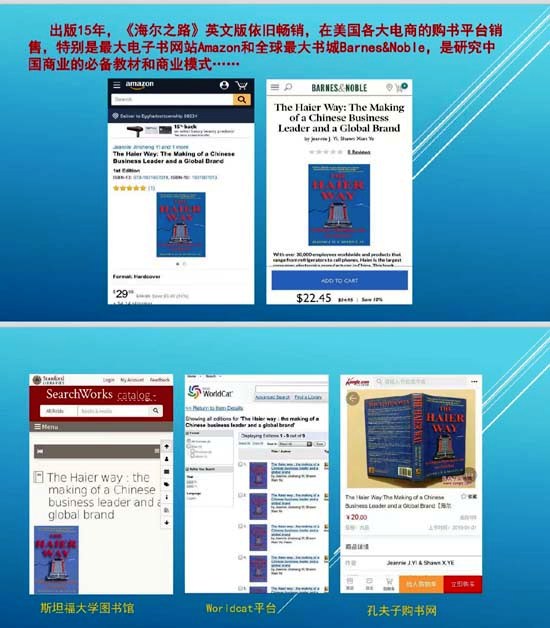
Twenty-two years ago, I co-authored The
Haier Way in English. I had visited
Qingdao, spoken with the people building
the company, and seen their
determination to take a Chinese brand
into the world.
During my research, I asked Zhang Ruimin,
then chairman of Haier’s board, “Which
companies do you measure yourself
against?”
His answer was clear: Sony and GE. Sony
for its precision.
GE for its innovation.
Those two names became important
reference points in the book.
They helped American readers understand
Haier’s ambitions through companies they
already knew.
My co-author, who was also a publisher,
had studied journalism at NYU and worked
at a major American publishing company.
He understood how difficult it was to
interest American publishers in books
about China. Yet he believed those
stories deserved readers. He invited me
to help tell one in English, with an
understanding of what American audiences
would question and what might persuade
them to listen.
There was plenty of skepticism.
I remember a journalist associated with
The New York Times questioning whether
Haier would even be here in six months.
Its name was unfamiliar. Its purchase of
a former bank building for a showroom
prompted questions about whether it
understood local zoning. Before people
would consider its ambitions, Haier had
to convince them it belonged in the
conversation.
At our book’s press conference at
Columbia University’s China Center, the
room was full. CNN journalists and other
American media attended. Looking around,
I felt we had opened a door.
Then came a question I still remember.
A CNN journalist suggested that Sony had
entered America as an established brand,
its reputation for Japanese precision
helping it win consumers. Haier, by
comparison, was unknown.
I challenged that assumption. Did he
know what it had cost Sony to establish
its own name?
I had explored that history in our book.
In 1955, Akio Morita received an offer
from an American watch company to
purchase 100,000 transistor radios,
provided they carried the buyer’s brand.
It was an enormous opportunity for a
young company. Yet Morita declined
rather than surrender the Sony name.
Sony later secured an American
distribution agreement that preserved
its own branding. (sony.com)
The point was that Sony’s familiar name
had once been unfamiliar, too. Its
reputation had to be built, and
protecting its identity required
difficult choices.
That was the perspective I wanted the
journalist to bring to Haier.
Learn the history. Examine the products.
Give the company a chance to be
understood.
After the press conference,
I felt hopeful about what a book could
accomplish.
Then I went to Best Buy.
The store was near the Asian supermarket
where I had been shopping. Employees
were stocking merchandise. Familiar
brands occupied prominent positions,
while a Haier air conditioner sat tucked
away in a corner, off the display
shelves.
I asked a young salesperson why it was
there.
He told me that Americans did not know
the brand.
We had filled a room at Columbia. But
here, where a family would actually
decide what to buy, Haier still needed
an introduction.
I showed him photographs from the press
conference. I explained that I was one
of the authors, that I had visited
Qingdao, and that I had seen the
company’s work firsthand. Then I asked
him to bring the air conditioner out
where customers could see it.
There was a red ribbon on my shopping
bag. I untied it and fastened it to the
air conditioner. The machine ran so
quietly that the moving ribbon made its
airflow visible.
A Black mother and her young son came
by. The boy stopped.
“Wow. Cool.”
His mother came over to look.
And she bought the Haier air
conditioner.
That ending matters to me. A product had
moved from an overlooked corner toward a
place in someone’s home. The salesperson
gave it space. A child noticed. A mother
made her choice.
A fair chance became a sale. An
unfamiliar name began a relationship
with an American household.
At Columbia, I used business history to
challenge an assumption. At Best Buy, I
used a red ribbon to help people see a
product’s qualities. Both experiences
taught me to begin with the audience:
what do people believe, what have they
overlooked, and what will help them
judge for themselves?
Years later, Haier’s journey took a turn
that gave my conversation with Zhang
Ruimin new meaning.
In June 2016, Haier acquired GE
Appliances for $5.6 billion. One of the
names he had identified as a benchmark
became part of Haier’s own story. (
pressroom.geappliances.com )
I think about that whenever I remember
the corner of Best Buy.
Americans deserve to know the story
connecting those two moments.
The wording matters: GE Appliances, a
Haier company. Haier acquired the
appliance business, a part of GE’s wider
industrial history that touches the
ordinary routines of home. (geappliancesco.com)
For generations of Americans, GE has
been a familiar name in the kitchen and
laundry room. It carries memories of
family meals, first homes, and machines
used for years. That trust deserves
respect.
Haier’s ownership adds a Chinese chapter
to this American history. GE Appliances
reports continued investment in American
operations and manufacturing under
Haier’s ownership. The relationship
reaches beyond the names on corporate
documents into jobs, communities, and
households. (geappliancesco.com)
Someone opening a GE refrigerator may
know little about the Chinese company
behind the business. The appliance is
familiar. The larger story is still
waiting to be told.
And now, in the age of AI, I want to ask
my old question again.
Which companies should we look at to
understand Haier’s next chapter?
My own reference points would include
Apple and Tesla. Apple brings so much of
daily life into the palm of our hand.
Tesla makes us think about the
relationship between mobility, software,
and the places we travel. Where might
Haier take the home within that changing
world?
Haier is already exploring connections
between homes and vehicles through
partnerships with automakers, including
GAC and Changan. (haier.com
(Its relationships with households also
offer an opportunity to understand how
people live. With customers’ permission,
information from connected products
could help identify needs and make daily
routines easier.
I imagine the phone in our hand, the car
taking us home, and the appliances
waiting there working more naturally
together. Technology could take care of
more of the small tasks that consume our
attention. Different systems could
complement one another, earning our
trust through dependable service.
The question for The Haier Way II is how
that possibility becomes useful in real
homes.
Watching the summit coverage today, I
find myself smiling at a thought. If I
were at tonight’s planned state dinner,
I might be the guest asking about the
kitchen: how much could automation help
the people preparing and serving the
meal—and what could we learn from it
about making everyday life easier? The
summit and state dinner are occasions
for the two countries to meet at the
highest level. (reuters.com),
(indianexpress.com)
My curiosity would be about how
cooperation reaches everyone else.
After all, what do we hope to achieve by
coming together? Surely part of the
answer is a better life for people in
both countries.
For me, globalization is already visible
around the dinner table. It is in the
refrigerator holding our food, the stove
warming a pot, and the dishes we carry
to share. Products made in China and
America sit alongside one another in our
homes. Behind them are the skills and
work of people in both countries.
Then we sit down together and eat.
That is the human story I want to tell.
Through Haier, I want readers to see how
Chinese enterprise and American
experience can contribute to a shared
future—and to examine where that promise
has been fulfilled and what remains to
be done.
We will conceive and write this next
book in English, for people around the
world who do not read Chinese. I bring
the memory of Haier’s earlier journey, a
life across two cultures, and the
experience of explaining that journey to
American audiences.
Twenty-two years ago, I wanted a
salesperson to give Haier a place on the
shelf. Today, I want readers to
understand how it became part of the
American home, and what its next chapter
might mean for the way we live.
I still see that little red ribbon
moving in the air.
Now I also see a dinner table, with
people sitting together over a meal
prepared through the work of both
countries.
That, to me, is globalization coming
home. |
|
|
 |
|
|
 |
|
|
 |
|
|
 |
|
|
|
|
| |
|
|
Back To Society News |
|
| |
|