Black Tie
International Magazine China 1
2 3 |
|
Share this page with your friends |
|
|
www.blacktiechina.com
Eirene Hope Liu and Lydia Lin
White House Presidential AI Challenge |
|
|
 |
|
Eirene Hope Liu and Lydia Lin |
Eirene Hope Liu and
Lydia Lin
Participate in the White House
Presidential AI Challenge,
with Their Campus Safety Initiative Reaching the White House
—Receiving Rare Direct Written Praise
from the President.
Before the Official Announcement of
Results!
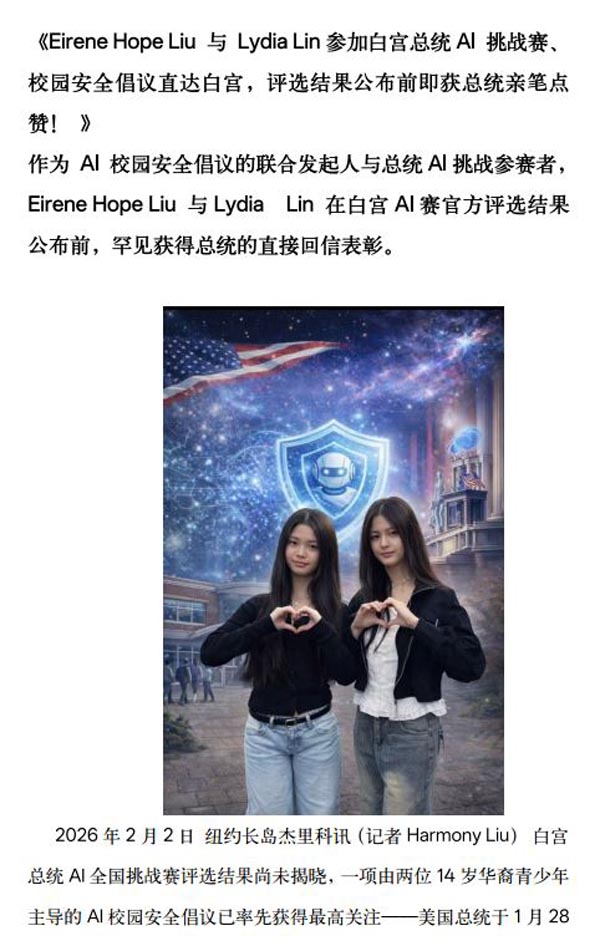
As co-founders of the AI Campus
Safety Initiative and participants
in the Presidential AI Challenge, Eirene
Hope Liu and Lydia Lin received rare
direct written commendation from the
President before the official results of
the White House AI competition were
announced.
|
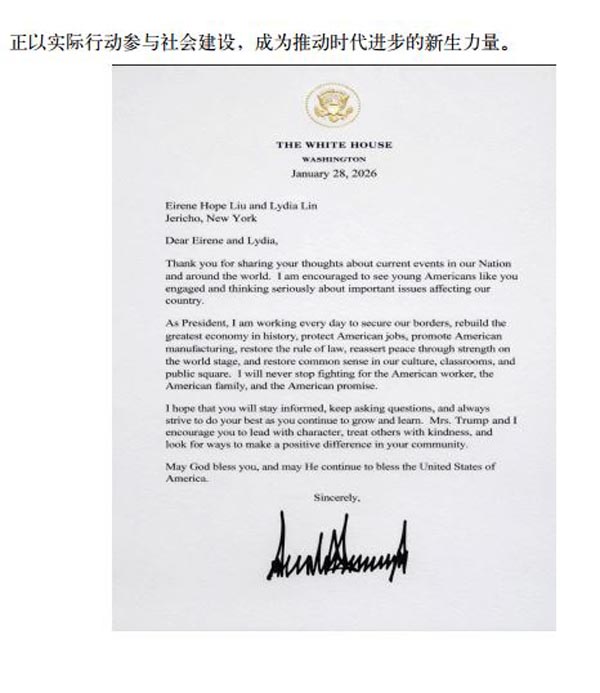
Ahead of the announcement of the White
House Presidential AI National Challenge
results, an AI campus safety initiative
led by two 14-year-old Chinese-American
teenagers has already garnered the
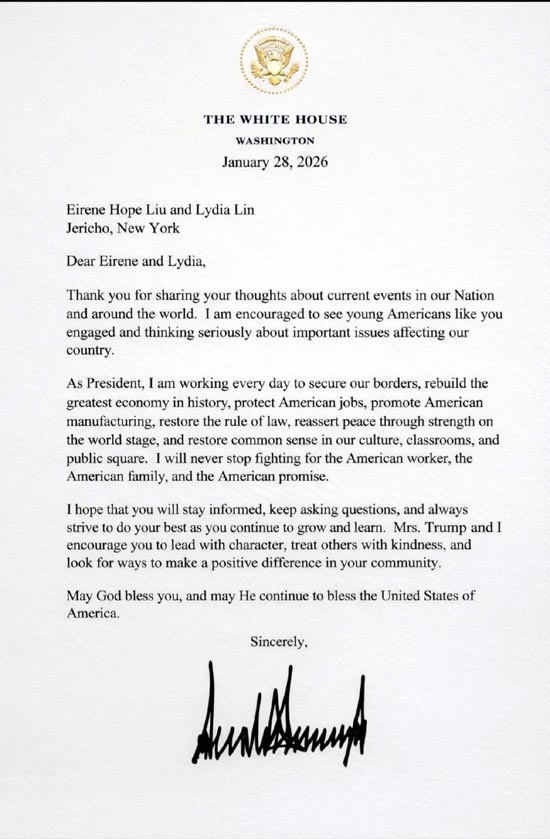
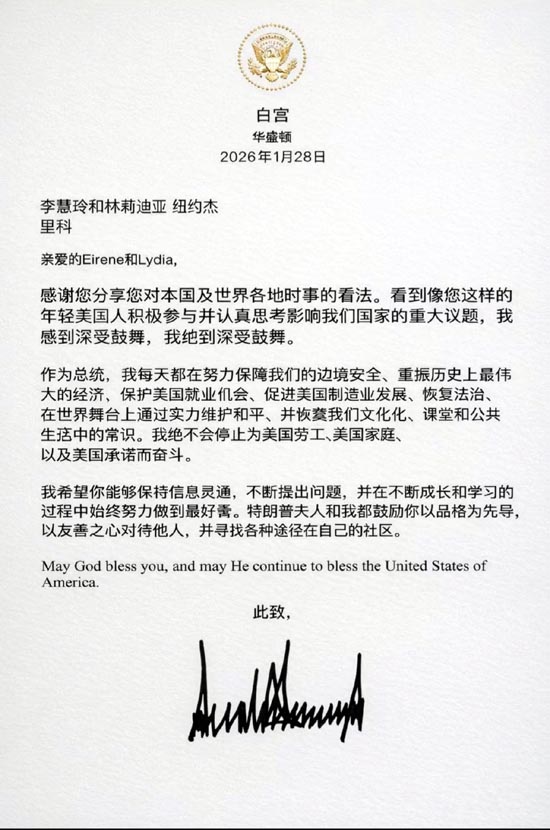
highest attention — the US President
signed a personal official reply on
January 28, publicly affirming the
initiative's value and significance.
According to observers of White House
affairs, it is extremely rare for the
President to personally reply and
recognize teenage participants before
the conclusion of the competition, and
this response has made the public
initiative launched by teenagers a hot
topic in the fields of American
technology and public safety.
The AI campus safety initiative that has
drawn the White House's close attention
was launched by Eirene Hope Liu and
jointly advanced by Lydia Lin, both
participants in the White House
Presidential AI Challenge championed by
the US First Lady. The proposal
submitted by Liu and Lin quickly came to
the attention of relevant White House
departments for its complete philosophy,
close alignment with the practical needs
of campus safety and technical
feasibility, ultimately earning a
personal reply from the President before
the competition results were announced.
In the letter, the President not only
affirmed the two teenagers' in-depth
reflection on national public safety
issues but also encouraged them to
always participate in public affairs
with a sense of responsibility,
integrity and goodwill. This national
recognition has also given official
validation to the power of youth
participation in public affairs.
|
The initiative was born out of the two
girls' long-standing attention to the
current state of campus safety in the
United States. Confronted with the
frequent occurrence of school shootings
and various public safety risks in
recent years, Liu Xinyuan and Lin Xiaoli
have conducted continuous data
collection and research on campus
safety. In an open letter to the
President, the First Lady, congressional
leaders and major mainstream media
outlets, they raised a pointed question
hitting the industry's pain points: "As
AI is widely applied in finance,
national defense and healthcare, should
the United States, the most advanced
country in AI, take the lead in
introducing AI into the campus safety
system to better protect the next
generation?" This public initiative
echoes the competition proposal they
submitted, forming a complete plan with
public value, technical logic and
practical policy significance, and
turning teenagers' rational thinking
into an important voice for advancing
the upgrading of campus safety.
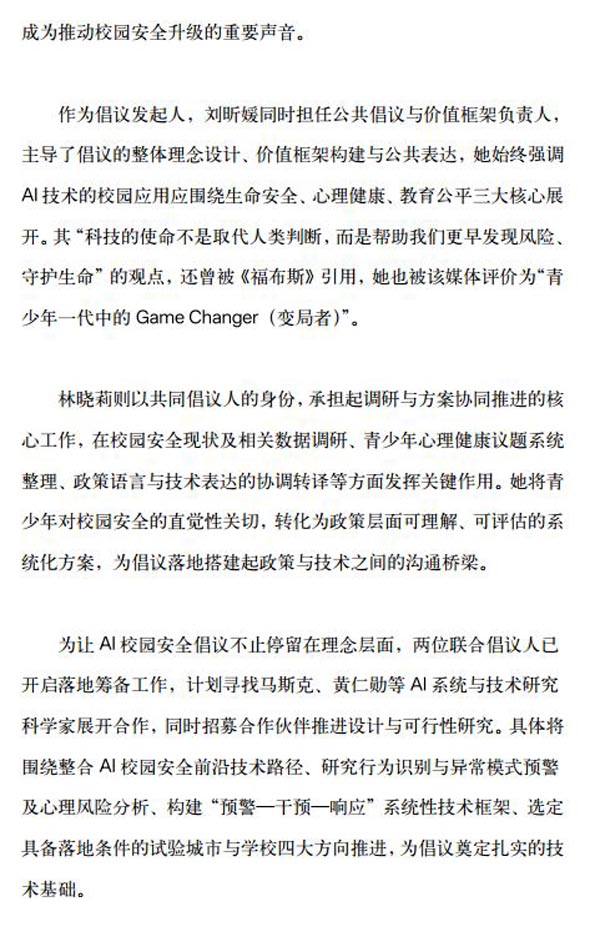
As the initiator of the initiative,
Eirene Hope Liu also serves as the
person in charge of public advocacy and
value framework, leading the overall
conceptual design, value framework
construction and public communication of
the initiative. She has always
emphasized that the campus application
of AI technology should center on three
core pillars: life safety, mental health
and educational equity. Her viewpoint
that "the mission of technology is not
to replace human judgment, but to help
us detect risks earlier and protect
lives" has also been quoted by Forbes,
which named her a
"Game Changer among the teenage
generation".
|
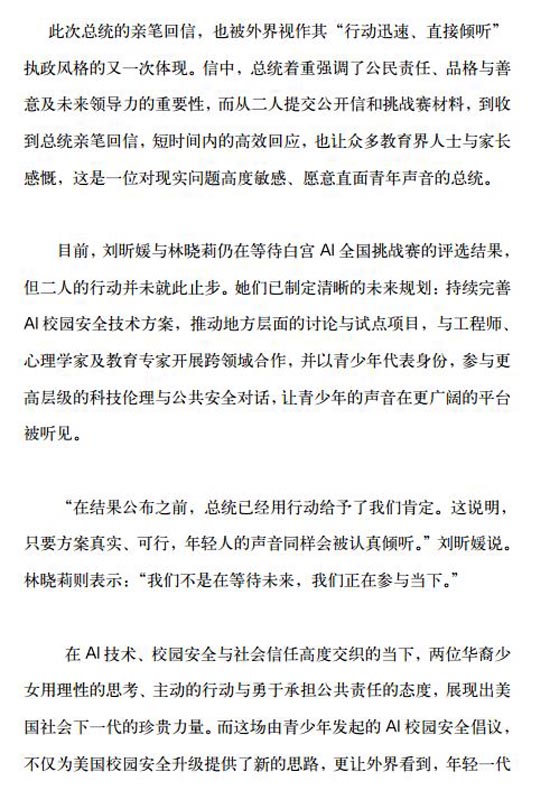
Lydia Lin, as a co-initiator, undertakes
the core work of research and program
coordination, playing a key role in the
investigation of the current situation
of campus safety and relevant data, the
systematic sorting of adolescent mental
health issues, and the coordinated
translation between policy language and
technical expression. She has
transformed teenagers' intuitive
concerns about campus safety into a
systematic plan that is understandable
and evaluable at the policy level,
building a communication bridge between
policy and technology for the
implementation of the initiative.
To ensure that the AI campus safety
initiative is not just a conceptual
effort, the two co-initiators have
launched preparation work for its
implementation, planning to collaborate
with AI system and technology research
scientists such as Elon Musk and Jensen
Huang, and simultaneously recruiting
partners to advance design and
feasibility studies. Specifically, they
will focus on four key directions:
integrating cutting-edge technical
pathways for AI campus safety,
researching behavior recognition,
abnormal pattern early warning and
psychological risk analysis,
constructing a systematic technical
framework of "early warning -
intervention - response", and selecting
pilot cities and schools with the
conditions for implementation, laying a
solid technical foundation for the
initiative.
The President's personal reply has also
been regarded by the outside world as
another embodiment of his governing
style of "acting quickly and listening
directly". In the letter, the President
highlighted the importance of civic
responsibility, integrity and goodwill,
and future leadership. The efficient
response in the short period from the
two girls submitting the open letter and
competition materials to receiving the
President's personal reply has also
moved many educators and parents, who
commented that this reflects a President
who is highly sensitive to practical
issues and willing to face the voices of
young people directly.
At present, Eirene Hope Liu and Lydia
Lin are still awaiting the results of
the White House Presidential AI National
Challenge, but their actions have not
stopped there. They have formulated a
clear future plan: to continuously
improve the AI campus safety technical
proposal, promote local-level
discussions and pilot projects, carry
out cross-disciplinary cooperation with
engineers, psychologists and education
experts, and participate in higher-level
dialogues on technological ethics and
public safety as youth representatives,
so that the voices of teenagers can be
heard on a broader platform.
"Before the results were announced, the
President has already given us
recognition through his actions. This
shows that as long as the proposal is
genuine and feasible, young people's
voices will also be taken seriously,"
said Eirene Hope Liu. Lydia Lin added:
"We are not waiting for the future; we
are participating in the present."
At a time when AI technology, campus
safety and social trust are highly
intertwined, the two Chinese-American
teenagers have demonstrated the precious
strength of the next generation of
American society through their rational
thinking, proactive actions and courage
to take on public responsibility. The AI
campus safety initiative launched by
teenagers not only provides new ideas
for the upgrading of campus safety in
the United States but also lets the
outside world see that the younger
generation is participating in social
construction with practical actions and
becoming a new driving force for
advancing the times.
|
 |
|
|
 |
|
|
 |
 |
 |
 |
 |
|
|
|
|
 |
|
Eirene Hope Liu |
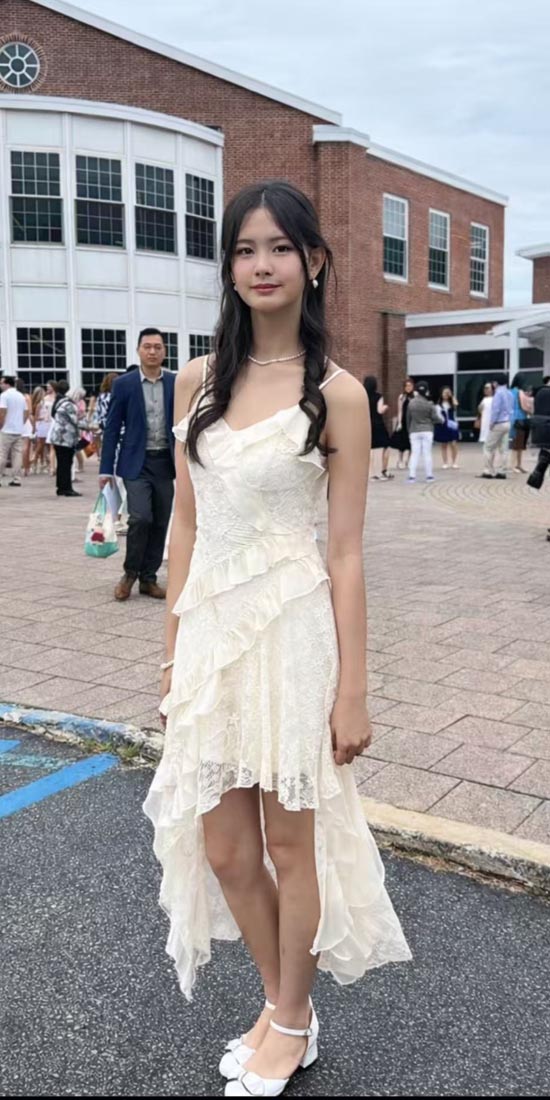 |
|
Eirene Hope Liu |
 |
|
|
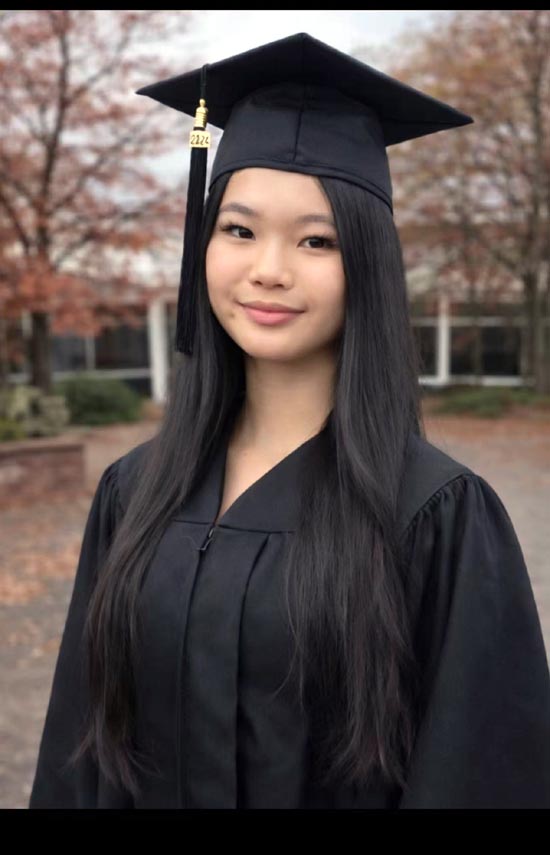 |
|
Eirene Hope Liu |
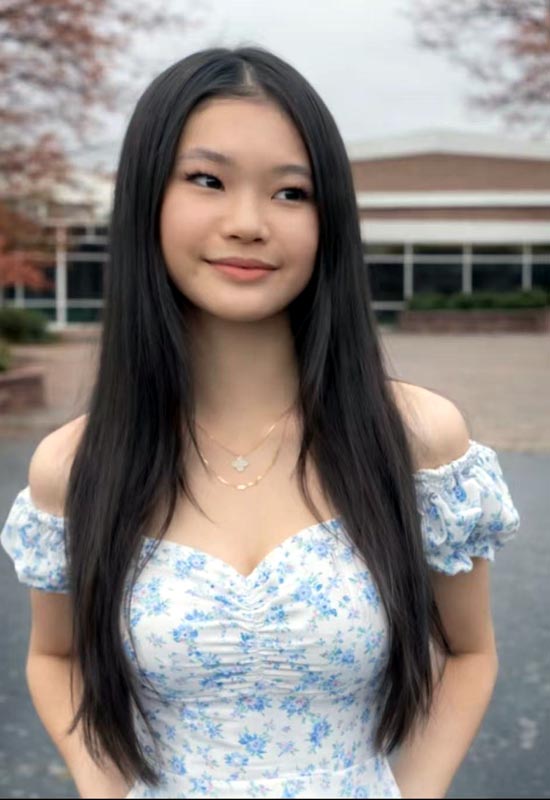 |
|
Eirene Hope Liu |
|
|
|
|
|
|
|
|
| |
|
|
Back To Society News |
|
| |
|