|
Dr.
Judy Kuriansky |
|
Share this page with your friends |
|
|
www.blacktiemagazine.com
Dr. Judy Kuriansky:
25
years after 9/11: A psychologist first responder reflects on
her professional and personal journey
|
 |
|
Dr. Judy Kuriansky |
Black Tie International Magazine,:
25 years after 9/11:
A psychologist first responder reflects on her professional and personal
journey |
|
|
25 years after 9/11: A psychologist first responder
reflects on her professional and personal journey
By Dr. Judy Kuriansky |
|
|
 |
|
|
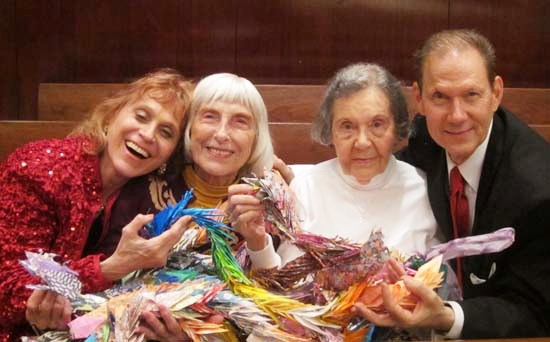
Most people had a
stuffed teddy bear growing up – something to cuddle and
comfort, especially at bedtime. Some still have their
now-tattered old friend.
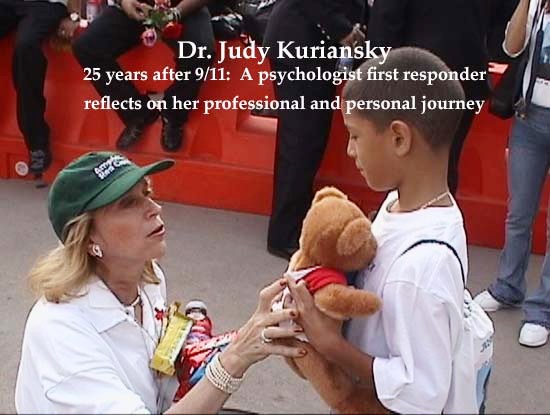
After the terrorist attacks on the World Trade Center on
September 11, 2001, we first responders gave out many teddy
bears.
I will never forget the little boy who grasped my bear,
dressed in its Red Cross shirt, pressed it to his chest and
asked, “Will he bring my daddy back?” Nor will I forget the
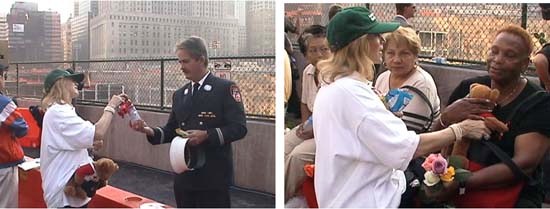
firefighter watching nearby who protested, “Wait a minute,
Dr. Judy. I want a bear too.”
I happily gave one to him – and to others! He was right.
Adults need bears too. |
|
|
 |
|
|
Stuffed toys provide
“contact comfort”: the feeling of safety and warmth that
comes from physical touch and is rooted in the earliest
bonds of the child and caregiver. Psychologist Harry
Harlow’s famous research showed that infant monkeys
preferred a soft cloth-covered surrogate mother to a wire
figure that provided milk.
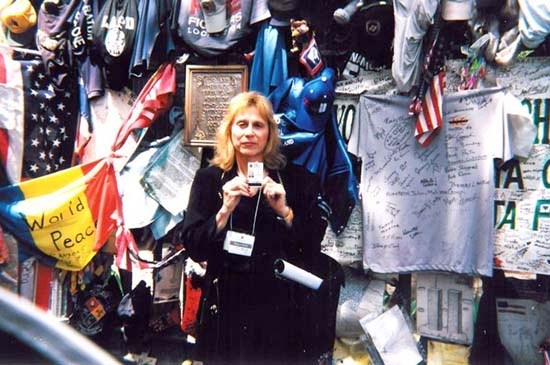
After the attacks, people constructed memorial walls covered
with photographs of lost loved ones, bears, flowers, and
flags, as another way to feel comforted and connected.
|
|
|
 |
|
|
The power of
anniversary reactions
An “anniversary reaction” occurs around the date of a past
traumatic or emotionally charged event. The date becomes a
“marker” that can trigger emotional, behavioral, cognitive,
interpersonal, social, or spiritual responses.
Happy markers -- a wedding, graduation, birth, or major
success–– can stimulate pleasure chemicals in the brain and
positive emotions. Painful markers such as divorce, death,
or job loss can get lodged in the body and memory to an even
stronger degree than happy ones, disrupting our alignment
and well-being.
Like for most events, the first, fifth, tenth and twentieth
anniversaries of 9/11 all got some special public attention.
Now, the 25th is being given particular significance,
especially since it falls during America’s 250th anniversary
year – another national marker, although a celebratory one.
I was not there when the country was born, but I was there
the day after the 9/11 attacks. |
|
|
My assignment at
Ground Zero
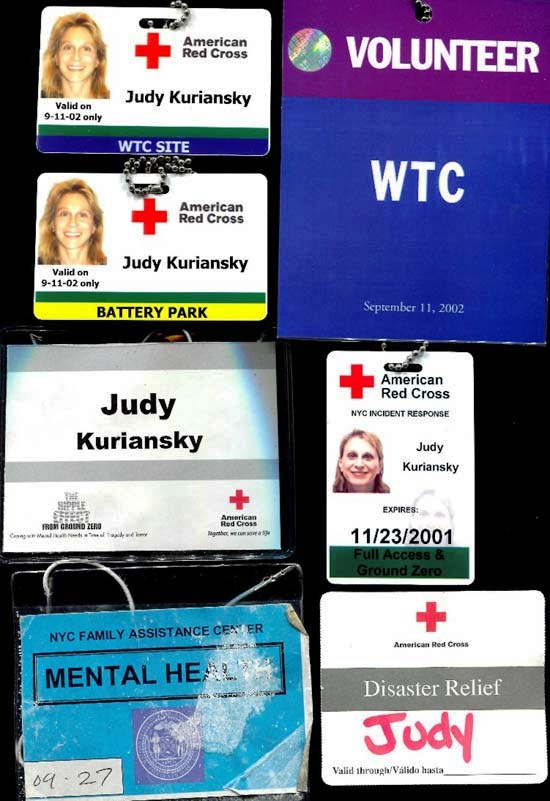
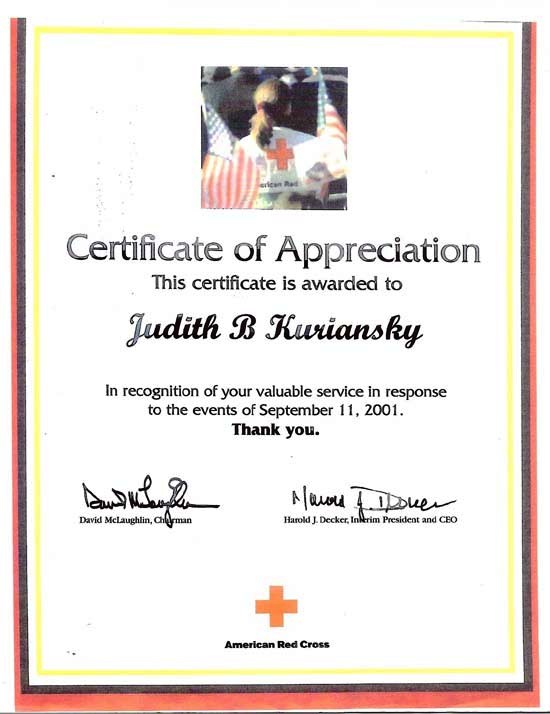
Right after the towers fell, I began serving as a Red Cross
mental health volunteer. I was assigned to the “pit” at
Ground Zero: the massive void left by the collapsed towers.
It was filled with smoke, dust, debris, and, horrifically,
human remains. Also called the “pile,” it was also a tomb
for those who perished.
I chose the night shift because years of hosting late-night
radio talk shows and playing in a band made those hours
familiar. Each evening, I walked the perimeter of the pit
alongside police officers, firefighters, rescue and
construction workers, and utility crews. Our assignment as
mental health professionals was to hand out water, apples,
and candy, as well as warm socks, gloves, and sweaters when
the recovery stretched months into the chillier autumn. |
|
|
 |
|
|
On these “walk-abouts,”
we mental health professionals were supposed to offer
companionship and simply be “present” if someone wanted to
talk, but not to press people to discuss feelings. Still,
many did, especially when they recognized me as “the Dr.
Judy” (name I am fondly known by) on the radio and TV and in
newspapers whom people trusted to talk about their feelings
and who gave good advice. They spoke about being angry,
frustrated, exhausted, and depressed.
I can still picture sitting beside an FBI agent on the
broken stoop of a building adjacent to the pit, talking
about hypothetical investigations and very real feelings. He
gave me his cap that I cherish to this day, like all items
from significant experiences that take on special value.
One morning, as dawn was breaking and I was making my way to
the subway to get home, an electrical company trolley
passed. The driver called out to me, “Dr. Judy, can I give
you a lift?”
“Sure,” I answered.
The trolley swerved repeatedly. “See those white objects on
the ground,” he said. “I have to be careful. Those are bone
fragments from people who didn’t make it.”
I covered my eyes in upset.
It was only one of many deeply emotional sharing on those
days.
To ease the tension during shifts, a respite center had been
set up at the adjacent Marriott hotel where responders could
watch TV, get a massage, or sink into an oversized chair.
During many long nights, firemen – who knew “Dr. Judy” --
invited me into the firehouse near the pit. They often ended
up asking me questions about sex, or joking about sex, since
they knew I was not only a clinical psychologist but a sex
therapist. This was healthy since humor -- and laughing
about sex – offers a needed break from misery and a welcome
reprieve from relentless sadness.
After our mental health shifts, a mental health supervisor
would lead a “debriefing” session that always included the
question, “What are you doing for your own mental health?”
Most volunteers said they collapsed into bed and tried to
fall asleep despite anxiety and past intrusive nightmares.
Many took a bath. I called my mother, whose unwavering
empathetic ear and loving heart never failed to comfort me.
|
|
|
 |
|
|
A public face to
the recovery
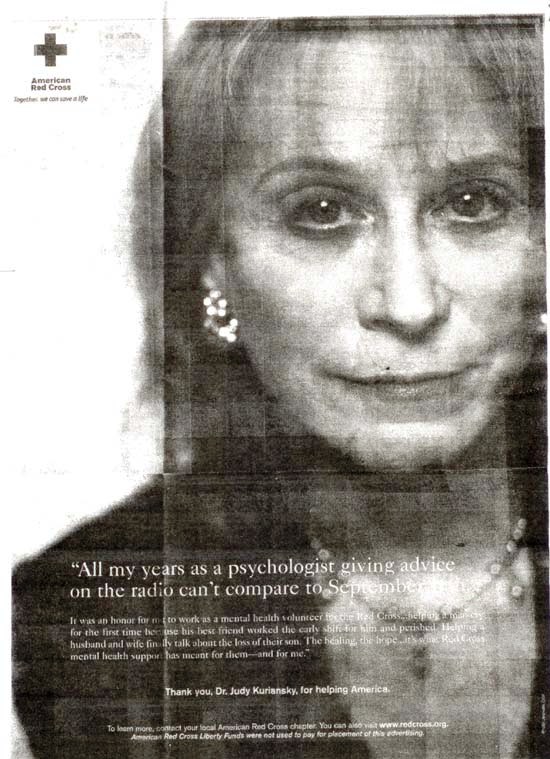
Because I was well-known through all my media work, the Red
Cross asked me to appear in their television and newspaper
campaign thanking recovery workers from different fields.
Beneath my photograph, the words read, “All my years as a
psychologist giving advice on the radio can’t compare to
September 11.” |
|
|
 |
|
Red Cross
newspaper campaign about 9/11 |
|
|
|
My Ground Zero
posting continued for months. Later, I was assigned to the
Family Assistance Center set up on an uptown pier where
families could obtain continuing help with housing, legal
matters, health care and mental health support. |
|
|
 |
|
|
The first
anniversary – and “Towers of Light”
The first anniversary of 9/11 was understandably momentous,
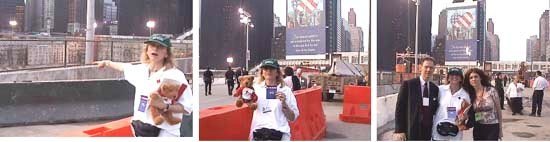
personally and publicly. I returned to Ground Zero for the
memorial service. A long ramp led down into the pit where
families, responders, and politicians gathered. Two
students, Deborah and Russell, who had taken my class at
Columbia University Teachers College, came with me. |
|
|
 |
|
|
|
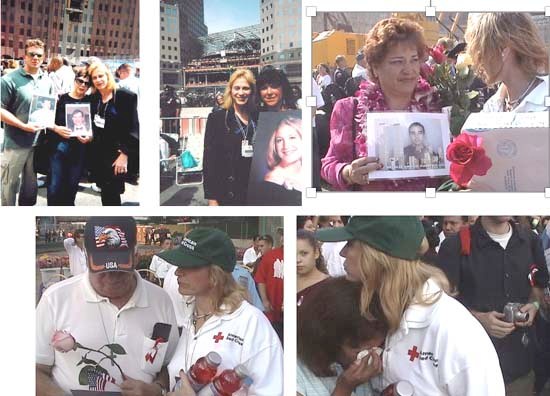
On the way, I
stopped to speak to families. Many carried photos of the
loved ones they had lost, a painfully familiar sight. As we
had done after the disaster, we distributed water and teddy
bears, and this
time, also flags and flowers. Some people collapsed into my
arms and cried. |
|
|
 |
|
|
|
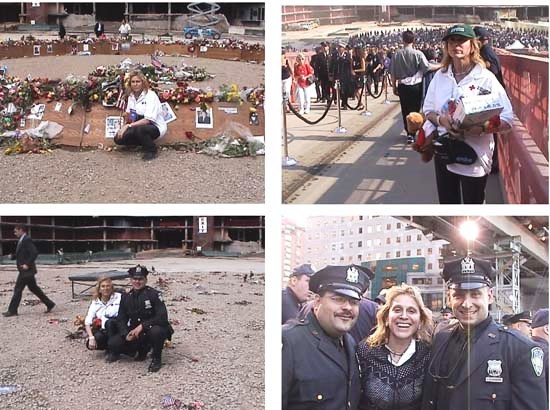
Reunions with people
who have shared a trauma can itself be healing. It was
wonderful to see police officers and other responders I had
come to know during that early recovery time. |
|
|
 |
|
|
 |
|
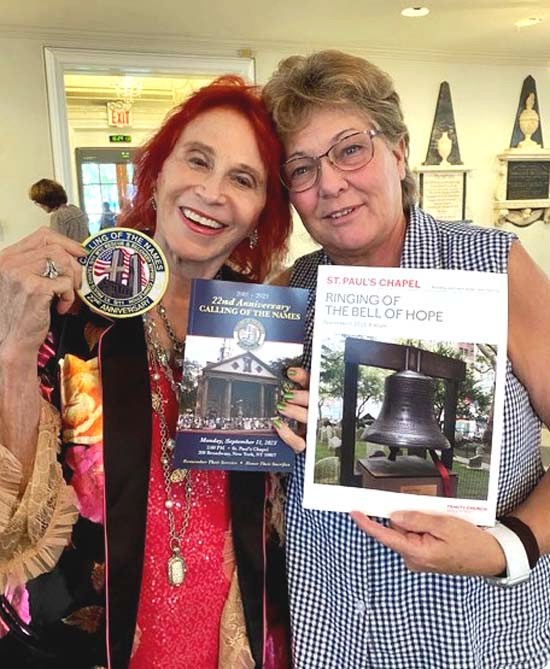
With first
responder massage therapist Beth Kapp at 9/11 VOICES
|
|
|
One experience came
to define a great deal of my life after the attacks. Since
9/11 had disrupted people’s lives and relationships so
drastically, as a final project for my class on the
“Psychology of Intimacy,” I gave the students an assignment
for their final to create something to help healing from
such tragedies. Russell Daisey – who had taken my class
because he was familiar with and appreciative of my advice
in the media – decided to write a song since he was an
accomplished international composer and musician who had
performed for Presidents. He asked me to contribute to the
lyrics to be sure that they were psychologically sound. The
anthem was meant to honor the victims and the heroes while
offering hope to survivors and people everywhere.
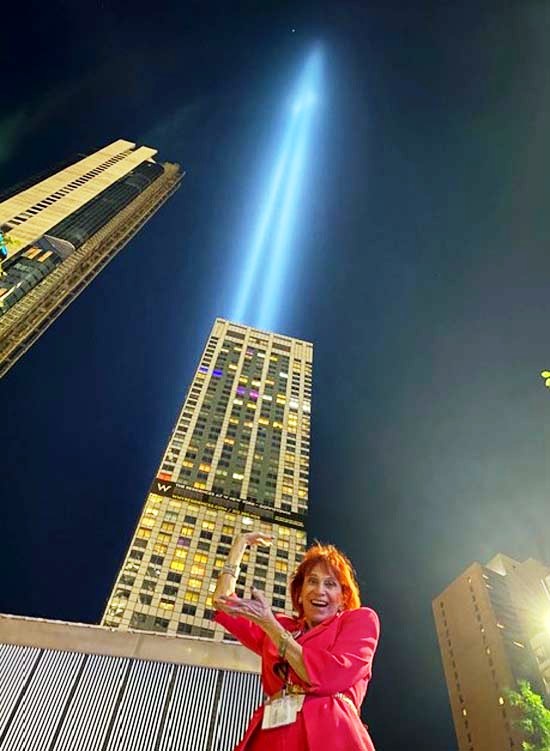
The song, called “Towers of Light,” is named for the two
beams that echo the actual Towers in shape that shine
annually over Ground Zero where the Twin Towers fell. The
music video from the 20th anniversary is at
https://youtu.be/1rEsmrHdshc?feature=shared |
|
|
 |
|
|
|
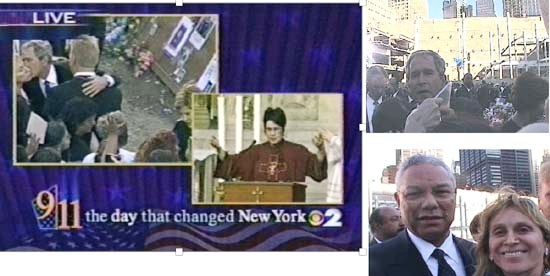
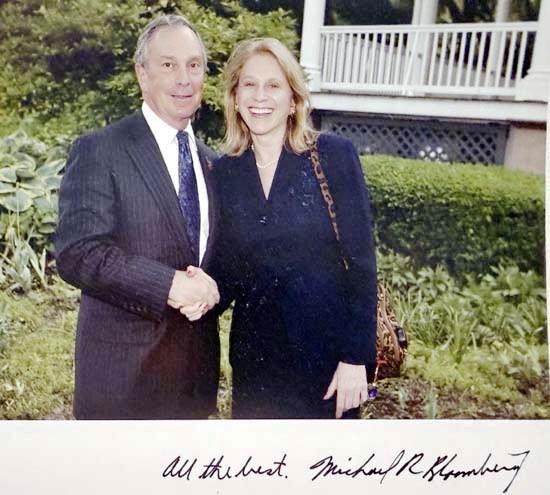
On the first
anniversary, I carried copies of the song on CDs -- the
medium at the time) -- and handed them to President George
W. Bush, Secretary of State Colin Powell, and Mayor Michael
Bloomberg (who took office in November 2001 from “America’s
Mayor” Rudy Giuliani, given that nickname for his valiant
leadership after the attacks for New York City and the
country). |
|
|
 |
|
|
 |
|
|
The healing power
of music
Research and experience show that music and art can foster
communication, connection, and healing. In diplomacy, they
are tools of “soft power” grounded in empathy,
communication, and empowerment in contrast to “hard power”
using coercion, force, and overpowering. That is why my
psychosocial resilience trainings and workshops include
activities focused on creating artwork and music.
Over time, Russell became my best friend and music writing
partner and joined me frequently at post-disaster sites
around the world, contributing his inspiring music. This
work aligns with my current focus on “cultural diplomacy”
and projects with Women4Diplomacy International which I
co-founded with the former Ambassador of Hungary to the UN,
Her Excellency Katalin Bogyay. This approach also perfectly
aligns for her, as President of the Hungarian National
Association of UNESCO (the United Nations Educational,
Scientific and Cultural Organization), a specialized agency
of the UN aimed at promoting world peace and security
through international cooperation in education, the
sciences, and culture. Our Arts4Peace events in Hungary
feature music and art for understanding and peace, with
guest ambassadors displaying art from their country and
reciting a national poem. Last year, I chose Sylvia Plath’s
poem “The Bell Jar” (in her book of that name). This year, I
chose Sara Tisdale’s “There Will Come Soft Rains” for its
message about peace, specifically that nature survives
harmoniously when humans destroy everything through war.
All these experiences recall the lessons from 9/11 about
terrorism and war, and about peace and harmony. |
|
|
Transforming
trauma to post-traumatic growth
Much research identifies human connections, community
cohesion, and reunions as crucial factors for healing. Over
the years since 9/11/2001, I have taken part in many
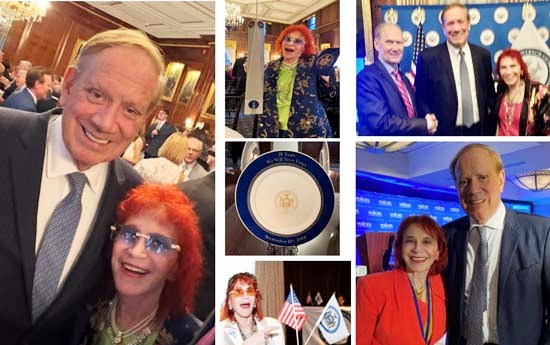
anniversary events. Among my favorites are those organized
by the Pataki Center in honor of Governor George Pataki, who
was governor of New York at the time of the attacks, and
who, like Mayor Giuliani, was honored for his service,
particularly for the reconstruction and economic recovery of
the downtown area. His events recognize the efforts of his
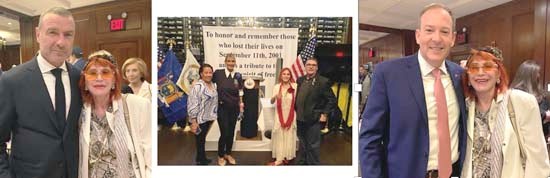
staff, public servants, and even celebrities. In 2024, actor
Liev Schreiber was given an award for his 9/11 activities
and his advocacy on behalf of Ukrainians suffering in the
current war with Russia -- a cause to which the Governor,
and me, are also devoted. |
|
|
 |
|
With Governor Pataki at the Pataki Center
9/11 commemorations |
|
|
 |
|
Actor Liev
Schreiber and politician Lee Zeldin now head of the
Environmental Protection Agency, who, when a member of
Congress, supported legislation to fund health care and
compensation for September 11 first responders. |
|
|
Every dark cloud has
a silver lining. Positive psychology has promoted the
concept of “Post-Traumatic Growth,” that positive outcomes
can come out of struggles with crises. This is an antithesis
to “Post-Traumatic Stress Syndrome” that refers to the
negative symptoms resulting from a crisis.
One major silver lining from the terrorist attacks has been
the friendship and creative collaboration with Russell, who
has a heart of gold, brilliant mind, and exceptional talent.
His kindness and loyalty is also extraordinary. Since 9/11,
we have participated in many conferences, events, and
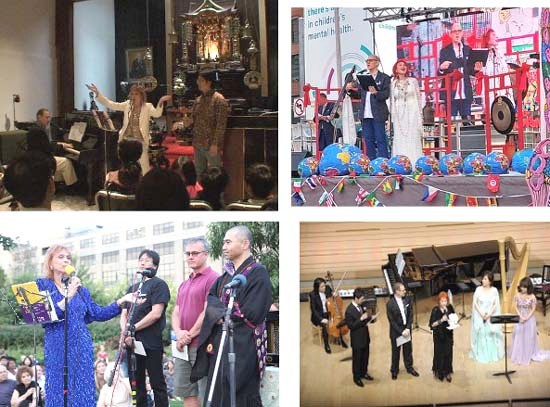
concerts around the world and performed the “Towers of
Light” song over 150 times, on five continents. This
includes appearances in Mexico, South Africa, Russia,
Sweden, and Japan. Audiences and venues have ranged widely,
from New York City’s Times Square to United Nations
conferences, psychology congresses, religious centers,
interfaith and peace celebrations, business boardrooms, and
memorials. These are particularly rewarding as they created
a bridge between cultures – which is central to my work at
the UN and my commitment since childhood to make a
difference in the world. Details of the journey of this song
are in another of my BlackTie columns at
https://blacktiemagazine.com/Judy_Kuriansky/Towers_of_Light.htm
|
|
|
 |
|
|
Memorable moments
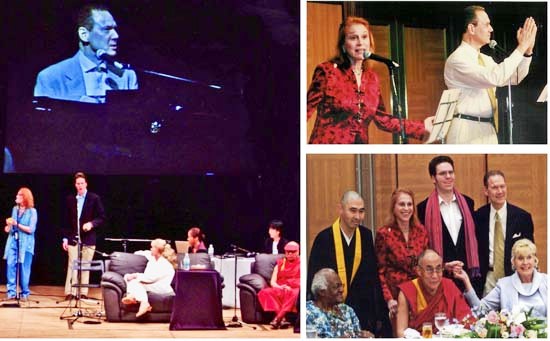
One of my most memorable experiences of the silver lining of
the dark cloud of 9/11 was our performance of the “Towers of
Light” song at the First Hiroshima International Peace
Summit, onstage with three Nobel Peace Prize laureates --
His Holiness the Dalai Lama, Reverend Emeritus Desmond Tutu
and Betty Williams. After the performance, the Dalai Lama
took Russell’s hands in his and said, “Powerful, very
powerful”. Later we sang for the Laureates at an invited
luncheon. |
|
|
 |
|
(left) Russell
Daisey projected on screen playing piano (right, top) Dr.
Judy, Neil Walsh (seated) Betty Williams and H.H. the Dalai
Lama (to his right unseen: Reverend Emeritus Desmond Tutu).
(right top) Dr. Judy and Russell singing (bottom) seated,
the three Laureates: Reverend Desmond Tutu, H.H. the Dalai
Lama, Betty Williams (standing from left): Reverend T.K.
Nakagaki, Dr Judy, Neil Walsh, Russell Daisey |
|
|
Family and
friends
Increased closeness with family and friends is another
silver lining. Research shows the importance of friends and
family to physical, mental and spiritual health. On a peace
walk with colleagues from Maine to Washington, D.C., the
answer people most often gave to what makes them happy was
“family.” My study results on positive outcomes from the
COVID pandemic likewise found that people valued spending
more time with family and friends.
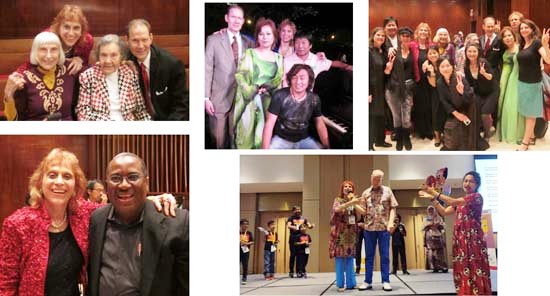
That truth was certainly evident in one of our performances
for a 9/11 memorial at the UN Church Chapel, where Ellie and
Sylvia came -- Russell and my mothers.
Such memorials also consolidated closeness with Haitian and
Japanese colleagues and friends, and new ones formed around
the world through healing events. |
|
|
 |
|
(Top row)
At the UN chapel: with Russell and our moms; Japanese
friends Shinji and Tomoko; a group of friends. (bottom row):
Father Wismick from Haiti; and at World Children’s Day in
Malaysia for Shariha Khalid |
|
|
Why remembrance
matters
Anniversaries that trigger memories of tragedy and death can
also unleash comfort, healing, and even joy. Reunions with
those who have shared the drastic experience are one way to
transform a trauma.
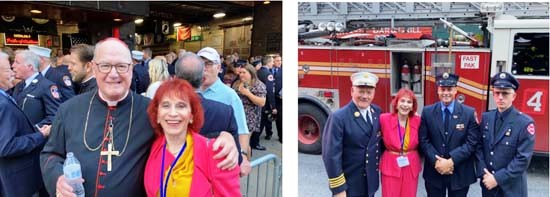
Consistent with this, I always attended ceremonies at local
firehouses in New York City, since I had spent a lot of time
at the firehouse across from the pit after the disaster
|
|
|
 |
|
With Cardinal
Timothy Dolan and firefighters on the 9/11 anniversary in
2021 at a firehouse memorial celebration |
|
|
In 2021, I
reminisced with firefighters and with Cardinal Timothy Dolan
at FDNY (Fire Department of the City of New York) Engine
Company 54, Ladder Company 4, Battalion 9 -- one of New York
City’s busiest firehouses, that also suffered the highest
loss of life (15 of its brothers) for any single firehouse
during the attacks. Cardinal Dolan has compared 9’11 to Good
Friday and emphasized September 12 as the beginning of broad
awareness about human resilience and rebuilding in general.
When public commemoration diminish on the years between
major anniversaries, survivors and responders can feel
forgotten. That is why I was particularly upset by the
comparatively muted 11th anniversary of 9/11, when a major
public official was quoted as saying that we should get over
it. I wrote an op-ed, entitled “Psychologist Laments
Lackluster 9/11 Memorials. One first responder and mental
health expert says more remembrance needed, posted on 9/11,
2012, by ABC News (https://abcnews.go.com/Health/psychologist-laments-lackluster-911-memorials/story?id=17207164).
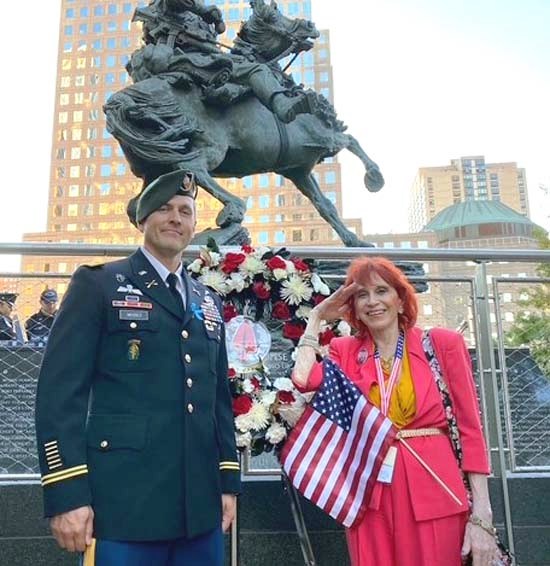
Patriotic and military gatherings bring me comfort,
especially as I was brought up as an “Army brat” -- a child
of the military (my father being an Army captain and dentist
stationed in Fort Campbell, Kentucky). |
|
|
 |
|
|
From first
responder to global resilience work
My first responder work began well before 9’11, actually in
1989 when the earthquake happened in San Francisco, although
I have to credit 9/11 for the huge escalation of these
efforts. I remember a powerful question I asked of survivors
after that earthquake, that I emphasized to my viewers on
the television show I was hosting on CNBC-TV entitled “Money
and Emotions.” The question was: “If a disaster hit, what
one thing would you be sure to take?” The answer reveals
what is most important to you. Besides grabbing IDs like
passports, many people mentioned they would save family
photographs.
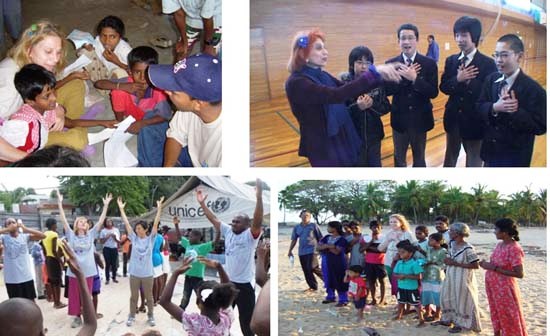
After 9/11, I went on to provide psychosocial resilience
trainings and workshops that I designed, at many sites in my
country and all over the world. Reactions of people and the
need for psychosocial help are similar in any crisis, so I
conducted these in very diverse settings. These included
after natural disasters (Hurricane Katrina in Louisiana,
earthquakes in Haiti, China and Iran, and the tsunami in Sri
Lanka), “man-made disasters” like school shootings (Sandy
Hook elementary school), a combination of a natural disaster
and nuclear accident (in Japan), and epidemics (AIDS,
COVID-19, and Ebola. Never afraid, I even went to
Ebola-stricken West Africa during the height of the
outbreak. |
|
|
 |
|
|
Resilience and
empowerment
Key to recovery is boosting resilience - the ability to
bounce back from any problem. Called “resilience and
empowerment” workshops, my interventions and unique
techniques (using art, and even movement and games) boost
those two skills and qualities. For example, in one
activity, you bounce a ball and see how it – like you – can
bounce back. Then, you bounce it higher and notice how you
can catch it. The exercise becomes a demonstration of your
capacity and confidence to cope. |
|
|
Cultural
diplomacy in action
To ensure the cultural relevance of my psychosocial
trainings and workshops, we collaborate with local artists
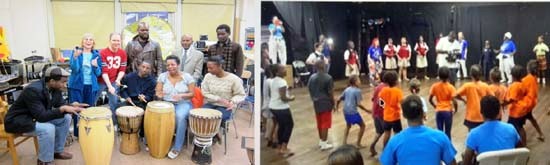
and experts. For example, before going to help after the
first earthquake in Haiti, we met with, and “jammed”
(spontaneously improvising music) with Haitian musicians to
determine appropriate beats and words for our recovery song
“Rebati” (meaning Build Back Better). In St Martin, after
the hurricane, we invited the head of Culture for the
Ministry, Clara Reyes, to teach a local song. Russell even
led a session with the children to write their own song
based on the country’s theme to “Build Back Better”
including the refrain, “Everything we do, we do with hope.”
|
|
|
 |
|
(Left) With
Haitian musicians (Right) teacher guiding kids in a local
song the head of St. Maarten’s Department of Culture
|
|
|
Soft diplomacy
goes global
9/11 has global meaning, since not only for Americans, but
people around the world, were affected. People from other
countries died in the attacks and responders came from other
countries. As my training and workshops continue to develop
after 9/11, they increasingly took on a global perspective.
As described above, we developed many relationships with
international artists, interestingly, many who are Japanese.
This is consistent with the fact that I spent 20 years on
many visits to Japan, including because my radio show was
syndicated there on Ysen 440 radio, and my relationship
books were translated into Japanese for which I did book
tours and speeches at public venues and universities
throughout the country.
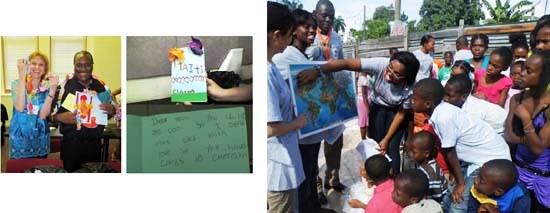
One of my intentions was to connect the kids globally, so
they know they are in a global world. I accomplished this by
activities that demonstrate their connections to others far
away, giving mutual support. In one of these activities,
schoolchildren in a New York City school drew greeting cards
which we brought to kids we were going to work with in
Haiti. In another one of my activities, I show a world map
to the group of children, for them to locate where kids in
other countries far away were also going through the same
trauma as they were (an earthquake, flood, or epidemic). The
kids always showed great interest and glee. |
|
|
 |
|
|
Helping helps
helpers and helpers need help
People often ask me if I get tired helping. I never do, even
after being on the air for years five nights a week for
three hours offering advice to callers. Research links
volunteerism and altruism shows with benefits to physical
and psychological well-being, including stimulating opiates
in the brain and a stronger sense of self-esteem and
self-worth.
But research shows that helpers can also need help.
For years, I have been attending annual examinations through
the World Trade Center Health Program at the Selikoff
Centers for Occupational Health Department of Environmental
Medicine and Public Health at the Icahn School of Medicine
at Mount Sinai Hospital in New York City, which is offered
to all first responders. I learned about this program at
meetings of Voices Center for Resilience, which supports
survivors, holds annual three-day conferences every 9/11,
offers mental health support during the year, and maintains
the 9/11 Living Memorial digital archive. The Center was
valiantly founded by Mary Felchet, who lost her son that
fateful day and transformed her grief into service for
others. It was at one of their meetings that I found out
about the Victim Compensation Fund that led me to the
Barasch & McGarry firm that handles cases of medical
conditions from 9/11 exposure. |
|
|
 |
|
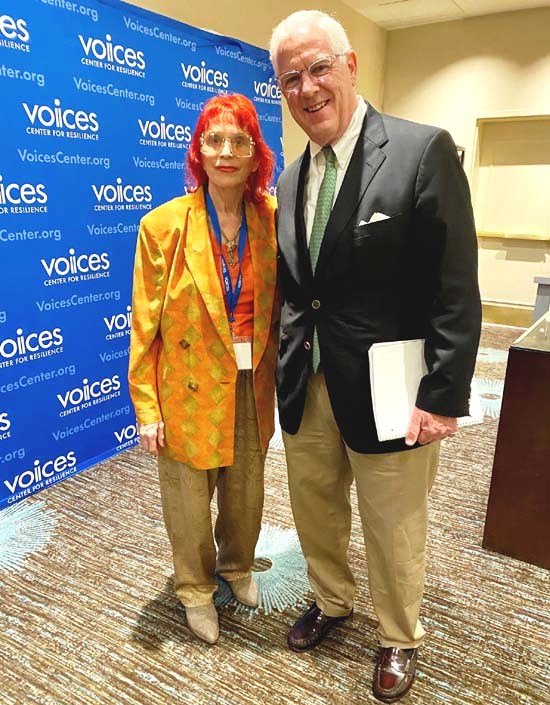
At a VOICES
Center for Resilience annual 9’11 conference, with John
Miller, CNN's Chief Law Enforcement and Intelligence Analyst
and a veteran journalist who covered the September 11
terrorist attacks |
|
|
Like many
responders, I had not been aware of the dangers of inhaling
the toxins at Ground Zero. But my breathing was suffering
and I was “certified” to receive help for my respiratory
problems.
The annual health form includes a long mental health
questionnaire, which I routinely ignored. That changed over
time and peaked upon learning that one of my psychologist
colleagues and friends, Sharon Brennan -- with whom I had
just enjoyed watching dolphins in the Water Park in
Disneyland when at a psychology conference in Orlando -- had
died from her 9/11-related illnesses.
My mental resolve was finally shaken when shortly before the
anniversary of 9/11 in 2024, I checked the box “yes”
indicating interest in mental health support and was
assigned a psychologist who understood my experience, as she
also works with firefighters who had responded that day.
Going public about checking that box was a big step. A
Washington Post reporter I was working with on a story asked
me if she could interview me about why a counselor would
need counseling. See:
https://www.washingtonpost.com/local/when-the-counselor-needs-help-i-didnt-get-a-chance-to-really-digest-911/2021/09/09/0caef27e-1184-11ec-882f-2dd15a067dc4_story.html
I was soon especially grateful that I had sought help. Two
months after 9/11 in 2024, a routine dermatology skin check
uncovered a tiny but suspicious spot on my chest that upon
biopsy turned out to be skin cancer. Fortunately, I had
emergency surgery to remove the lesion, and the final
pathology report said it was benign. But that has not
stopped my worry, since innumerable responders have
developed different kinds of 9/11-related cancers and also
an increasing number tragically die. |
|
|
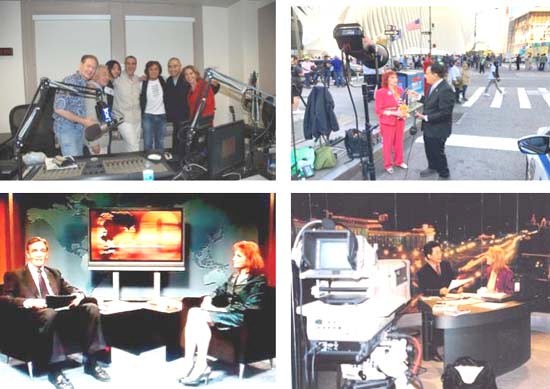
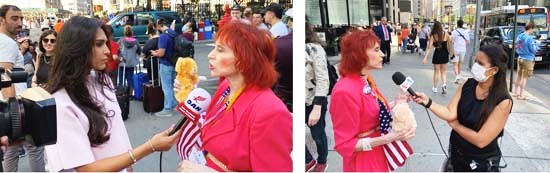
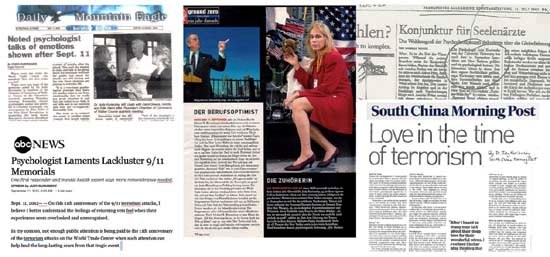
Using the media
to help
As a pioneer in what is called “media psychology” (creating
public awareness of psychological principles and advice), I
know the power of media to communicate, educate, and heal
from personal or wider crises. With that in mind, I have
written many articles of coping advice for local and
international print outlets ranging from the Mountain Eagle
in Alabama to the South China Morning Post and German Max
Magazine, and been interviewed on many local and
international media outlets from local news to UN TV,
Alhurra TV, TNT in Türkiye, and CCTV in China. On the China
TV “Dialogue” show, I showed my cherished bear -- that I had
from my service at Ground Zero -- to the interviewer, Yang
Rui, who told me casually that his son would be amused by
it, so I gifted it to him because he was a friend and
because I wanted his young son to be educated about what
happened on 9/11.
For the 10th anniversary of 9/11, I co-hosted an hour-long
special on RLTV, focusing on the crash into a field in
Shanksville, Pennsylvania of United Airlines 93 that the
hijackers likely intended to hit the US Capitol. Instead, it
was foiled by the brave passengers, one of whom famously
said, “Let’s roll.” I was especially honored to tell this
story because it receives less attention than the Twin
Towers attacks.
|
 |
|
|
 |
|
|
 |
|
|
How I will spend
9/11
The upcoming days surrounding September 11 will be full. I
expect sadness but also some celebration. I will participate
again in the three-day conference organized by the VOICES
Center for Resilience. I was even selected to be interviewed
for the oral archive (friends and family do the interviews
to create a sense of intimacy; Russell will interview me). I
expect to join a webinar on mental health hosted by the
World Trade Center Health Program. The afternoon and evening
will be more festive: a concert by the Philharmonic at 3:30
PM, organized by PAC NY (the Perelman Arts Center) and an
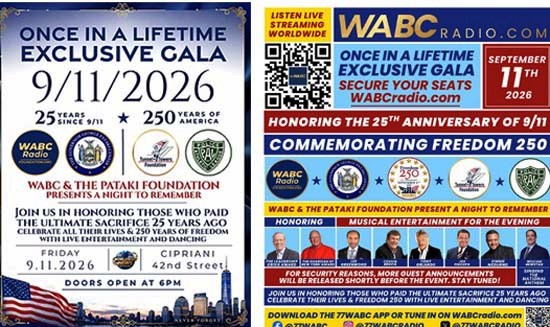
evening gala by WABC radio and the Pataki Center. To Russell
and my delight, we are also invited to perform the “Towers
of Light” song at St. Marks Episcopal Church in the Bowery
st an afternoon concert organized by our friend Reverend T.K.
Nakagaki, a Buddhist priest with whom we have done concerts
here and in Japan over many years. |
|
|
 |
|
|
The experience of
9/11 doesn’t stop on that day. On the day after, Saturday, I
expect a roller coaster of emotions, visiting my husband’s
grave with his best friend, but later, since it’s Fashion
Week (always at the same time but in stark contrast to
9/11), I intend to attend a friend’s fashion event – a
striking contrast to the solemnity of 9/11.
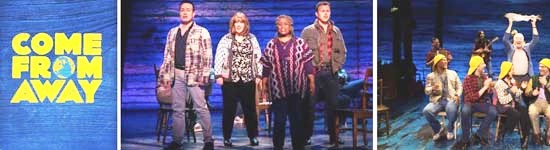
Sunday is back to remembrance, when I will attend a
performance of “Come From Away,” a Broadway hit musical a
few years ago that tells the true story of 7,000 stranded
airline passengers welcomed by the small town of Gander,
Newfoundland, after U.S. airspace closed on September 11,
2001. This event is another hosted by PAC NY. I had seen the
show years ago, at the invitation of my good friend Lois
Young, then Belize’s Ambassador to the United Nations, at an
opening hosted by Canada Mission to the UN. |
|
|
 |
|
|
What’s next?
Events related to the issues surrounding 9/11 will continue
to come up in months and years to come. Already, Russell and
I were invited to perform “Towers of Light” at the peace
festival organized by our friend Paul Sladkus for his Good
News broadcast, to occur in New York City’s Times Square
later in September. Also, my good friend and colleague
Darlyne Nemeth, a neuropsychologist with whom I have
co-authored several books on disaster and environmental
protection, invited me to reprise the workshop I conducted
with her several times for the community’s recovery from
Hurricane Katrina, now planned as a "Remembrance and
Recovery Workshop" on the occasion of the 10th anniversary
of The Great Flood of 2016, to take place this October 13 in
Baton Rouge Louisiana. Even though many people have
recovered physically, not everyone has recovered
emotionally; thus, the workshop is for individuals who want
to rebuild, restore, and recover their emotional resiliency.
|
|
|
My Advice for
healing
Over decades, I have responded to diverse types of
disasters: man-made (the Sandy Hook school shooting, the
bombing at the Frank Sinatra cafeteria in Jerusalem),
natural (tsunamis, floods, storms, or earthquakes in Haiti,
Sri Lanka, Japan, China, St. Martin, and even Iran) as well
as pandemics (COVID-19 and going to Sierra Leone at the
height of Ebola). Three central points I emphasize, learned
first from years of giving advice on the radio and in all
settings to all ages and cultures: everything you feel is
“normal,” you are not the only one, and there is always hope
and help. |
|
|
 |
|
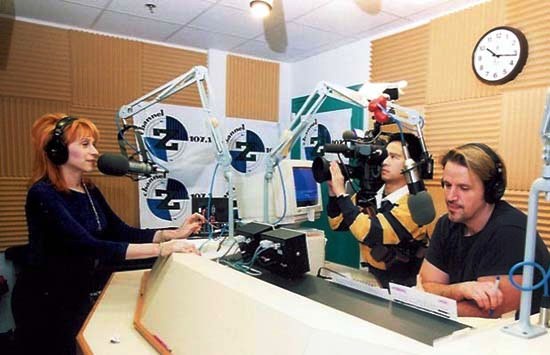
On the radio and
in the field |
|
|
Hope is crucial –
that motivated a song I co-wrote after helping in Sierra
Leone at the height of the Ebola crisis -- called “Hope Is
Alive.”
Also, my four C’s are simple: be calm, make connections,
seek comfort and share caring.
Specific tips:
|
|
• Respect your
reactions as “normal”. Trauma can produce reactions in
opposing directions on many levels. Emotions can be anger or
sadness. Interpersonally, you may seek more intimacy or
withdraw. Physically, you might have no energy or be
hyperactive. Spiritually, you may seek a Higher Power or
question faith.
• Give children extra support. Notice signs of trauma like
stomach aches, regressing to bedwetting, refusing to go to
school (for fear of parents’ dying while they’re away).
Create a “safe space” for them, encourage play, be
reassuring and model of coping.
• Assess stress across your life. A Holmes-Rahe “Life Stress
Inventory” measures the cumulative weight of life
experiences (with death and losses naturally weighing the
most). If stress persists and interferes with your daily
life, seek professional help.
• Reclaim what you can control. Notice where you fall on the
continuum of the “locus of control” – the degree to which
you, or forces beyond your control, determine your life.
Organize a closet, throw out unread magazines, or arrange a
new music playlist to feel less helpless and more empowered.
• Make meaning. Austrian psychiatrist and philosopher Viktor
Frankl drew on his horrific experience of surviving the
Holocaust to develop “logotherapy” to encourage the search
for meaning.
• Respect different coping styles. According to the Whole
Brain Thinking Methodology founded by my friend Ned
Herrmann, people with right-brain preferences feel
comfortable expressing feelings in contrast to left-brain
tendencies to analyze, become active, and avoid emotion.
Understanding these differences matters to maintaining trust
and intimacy.
• Look for the “silver lining in the dark cloud”. Greater
appreciation of family and friends, more attention to
self-care, and a wider world view with more tolerance for
others are positive outcomes of a negative event.
• Remember how you have coped before. Past resilience is
evidence of strengths and confidence you can mobilize again
to feel empowered
|
|
As terrorism and war
remain in the forefront of our present world and as we even
continue to recover from the COVID-19 pandemic and other
crises, this 25th anniversary of 9/11 offers an opportunity
for healing, through inner reflection and public communion.
Coming together – as we so often say at the United Nations,
is essential to achieve peace within ourselves and in the
world. |
|
|
Selected
references
References |
|
|
Videos
*Towers of Light” music video for 9/11 healing:
https://youtu.be/EQHwWP_ajtk?si=Sn6kC2KiarBWzsm4
*“Hope is Alive” music video for Ebola healing:
https://www.youtube.com/watch?v=YkLbxn2Irrw
*Transforming Trauma to Healing, Hope and Happiness.Video:
https://www.youtube.com/watch?v=bfdJ9jAomMw
*Psychosocial issues healing from Ebola:
https://www.youtube.com/watch?v=ZaqPpg4Q83s
* Sint Maarten: Dr. Judy’s trauma training for children
coping:
https://youtu.be/pVV1x7I_Ru8
|
|
|
Articles and
books
Brumley, J. (2021, September 17). “Marker events” leave
scars whether visible or not, psychologist explains.
Baptist News Global.
https://baptistnews.com/article/marker-events-leave-scars-whether-visible-or-not-psychologist-explains/
Cohen, B. (2015, February 9). How a New York psychologist
and an Israeli humanitarian organization are helping Sierra
Leone stand up to Ebola [Interview]. The Algemeiner.
https://www.algemeiner.com/2015/02/09/how-a-new-york-psychologist-and-an-israeli-humanitarian-organization-are-helping-sierra-leone-stand-up-to-ebola-interview/
Dvorak, P. (2021, September 9). When the counselor needs
help: “I didn’t get a chance to really digest 9/11.” The
Washington Post.
https://www.washingtonpost.com/local/when-the-counselor-needs-help-i-didnt-get-a-chance-to-really-digest-911/2021/09/09/0caef27e-1184-11ec-882f-2dd15a067dc4_story.html
HUMNEWS. (2012, March 10). One year anniversary of Japan
tsunami commemorated with “healing anthem” [Report].
http://www.humnews.com/humnewscom/2012/3/10/one-year-anniversary-of-japan-tsunami-commemorated-with-heal.html
Kuriansky, J. (2003). The 9/11 terrorist attack on the World
Trade Center: A New York psychologist’s personal experiences
and professional perspective. Psychotherapie Forum,
11(1), 36–47.
Kuriansky, J. (Ed.). (2007). Beyond bullets and bombs:
Grassroots peacebuilding between Israelis and Palestinians.
Praeger.
Kuriansky, J. (2010). Bringing emotional first aid and hope
to Haiti. Beliefnet.
https://www.beliefnet.com/inspiration/2010/02/bringing-emotional-first-aid-and-hope-to-haiti.aspx
Kuriansky, J. (2012, December 23). Christmas curse or
celebration: From Superstorm Sandy to Sandy Hook to the
financial cliff—Seven questions in crises. HuffPost.
https://www.huffingtonpost.com/entry/sandy-hook-elementary-shooting_b_2357207.html
Kuriansky, J. (2012, September 11). Psychologist laments
lackluster 9/11 memorials. ABC News.
https://abcnews.com/Health/psychologist-laments-lackluster-911-memorials/story?id=17207164
Kuriansky, J. (2013, October 28). Talking to kids about the
anniversary of Superstorm Sandy. HuffPost.
https://www.huffpost.com/entry/talking-to-kids-about-the-anniversary-of-superstorm-sandy_b_4167294
Kuriansky, J. (2013, October 26). Superstorm Sandy: Coping
with the one-year anniversary. CITIZENS Magazine.
http://statenislandpolitics.wordpress.com/2013/10/26/drjudy/
Kuriansky, J. (2019). Expressive arts for helping children
heal in crisis and disaster. In I. A. Serlin, S. Krippner,
and K. Rockefeller (Eds.), Integrated health care for the
traumatized: A whole-person approach (pp. 39–58). Rowman
& Littlefield.
Kuriansky, J. (2019). A model psychosocial support training
and workshop during a medical mission for Syrian refugee
children in Jordan: Techniques, lessons learned, and
recommendations. Journal of Infant, Child, and Adolescent
Psychotherapy, 18(4), 352–366.
https://doi.org/10.1080/15289168.2019.1690925
Kuriansky, J. (2020). Psychosocial recovery after natural
disaster: International advocacy, policy, and
recommendations. In K. E. Cherry and A. Gibson (Eds.),
The intersection of trauma and disaster behavioral health
(Chap. 19). Springer Nature.
Kuriansky, J. (n.d.). 12 tips for coping with mass shootings
and terror attacks: Advice for mothers coping. Medium.
https://medium.com/@DrJudyK/12-tips-for-coping-with-mass-shootings-and-terror-attacks-advice-for-mothers-coping-18e1b1cca545
Kuriansky, J., & Jean-Charles, W. (2012). Haiti Rebati:
Update on activities rebuilding Haiti through the Global
Kids Connect Project. Bulletin of the International
Association of Applied Psychology, 24(2–3).
Kuriansky, J., Margevich, A., Jean-Charles, W., & Daisey, R.
(2017). Resilience and recovery in natural disasters and
epidemics: Comparisons, challenges, and lessons learned from
train-the-trainer projects. In G. Rich and S. Sirikantraporn
(Eds.), Human strengths and resilience: Developmental,
cross-cultural, and international perspectives.
Lexington Books.
Kuriansky, J., & Nemeth, D. G. (2013). A model for
post-environmental disaster wellness workshops: Preparing
individuals and communities for hurricane anniversary
reactions. Ecopsychology, 5(S1), S38–S45.
https://doi.org/10.1089/eco.2013.0006
Kuriansky, J., & Nemeth, D. G. (2020). Rebuilding executive
functions in environmentally traumatized children and
adolescents. In D. G. Nemeth and J. Glozman (Eds.),
Evaluation and treatment of neuropsychologically compromised
children: Understanding clinical applications post Luria and
Reitan. Elsevier/Academic Press.
Kuriansky, J., Polizer, Y., & Zinsou, J. (2016). Children
and Ebola: A model resilience and empowerment training and
workshop. In J. Kuriansky (Ed.), The psychosocial aspects
of a deadly epidemic: What Ebola has taught us about
holistic healing (pp. 175–214). ABC-CLIO/Praeger.
Lessons from Ground Zero. (2002, August 23). The
Jerusalem Post.
Masangkay, M. (2015, March 23). Psychologist connects
disaster-affected children around the world. The Japan
Times.
https://www.japantimes.co.jp/nes/2015/03/23/national/psychologist-connects-disaster-affected-children-around-the-world/
Newsmax. (2021, September 10). The lessons 9/11 taught us
about COVID-19 and mental health.
https://www.newsmax.com/health/health-news/911-september-11th-mental-health-ptsd/2021/09/10/id/1035857/
Wrobel, S. (2021, September 10). Dr. Judy, who counseled
victims of 9/11 and Second Intifada, shares lessons on
trauma of terrorism. The Algemeiner.
https://www.algemeiner.com/2021/09/10/dr-judy-who-counseled-victims-of-9-11-and-second-intifada-shares-lessons-on-the-trauma-of-terrorism/
|
|
|
 |
|
Bookmark Dr. Judy's Column on Black Tie International
Magazine
https://blacktiemagazine.com/Judy_Kuriansky/Judy_Kuriansky_Main_page.htm
|
|
|
| |
|
| |
|