|
Dr.
Judy Kuriansky |
|
Share this page with your friends |
|
|
www.blacktiemagazine.com
Dr. Judy Kuriansky:
Africa Day at the UN
highlights Red Card violations, WASH, and youth
|
 |
|
Dr. Judy Kuriansky |
|
|
Black Tie
International Magazine:
Africa Day at the United Nations May 26, 2026
Africa Day at the UN
highlights Red Card violations, WASH, and youth |
|
|
|
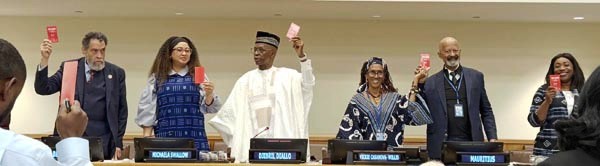
Given the current
World Cup, it is relevant to know that holding up a Red Card
signals a serious rules infraction – and disciplinary
penalty -- used notably in soccer. Red cards have also
become symbolic of the initiative that uses sports and
culture to combat violence and discrimination against women
and girls, promoted by the African Renaissance and Diaspora
Network (ARDN) that hosted the celebration of Africa Day at
the United Nations headquarters in New York City on May 26,
2026. |
|
|
 |
|
|
|
ARDN mobilizes civil
society and partnerships with government, business,
educators, youth and other stakeholders using sport and
culture to support the African Agenda 2063 and the United
Nations Sustainable Development Goals as they relate to
Africa and its diaspora.
Africa Day, celebrated annually to commemorate the founding
of the African Union (AU), dating back to 1961, celebrates
African unity, cultural heritage, and the continent's
socio-economic progress. |
|
|
 |
|
|
|
The event, convened
by the African Renaissance and Diaspora Network (ARDN), was
co-sponsored by the Permanent Mission of Sierra Leone to the
United Nations, the African Union Observer Mission, and the
United Nations Population Fund (UNFPA).
While the Red Card campaign is a signature of ARDN, this
year’s event focused on sustainable development enshrined in
the UN Agenda 2030 Goal 6 on safe water and sanitation and
in Africa’s Agenda 2063. WASH is an acronym that stands for
Water, Sanitation, and Hygiene. All three are essential for
public health to prevent disease and promote human dignity.
The event connected water and sanitation to gender equity,
sustainable development, practical solutions, youth
leadership, sports, and international partnerships at the
center of Africa’s renaissance |
|
|
 |
|
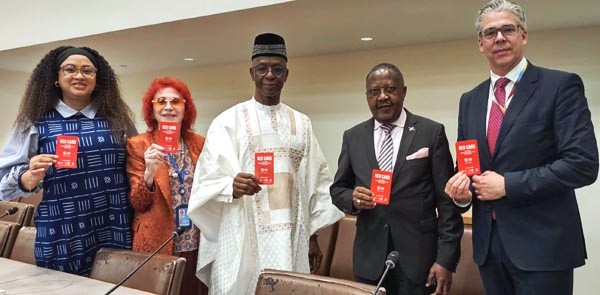
(left to right)
Deputy Permanent Representative of the Republic of Sierra
Leone to the UN, Michaela E.B. Swallow; Dr. Judy Kuriansky;
African Renaissance and Diaspora Network founder and CEO Dr.
Djibril Diallo; Ambassador of the Republic of Namibia to the
UN Penda A, Naanda; Ambassador of the Federal Republic of
Germany to the UN Ricklef Beutin |
|
|
 |
|
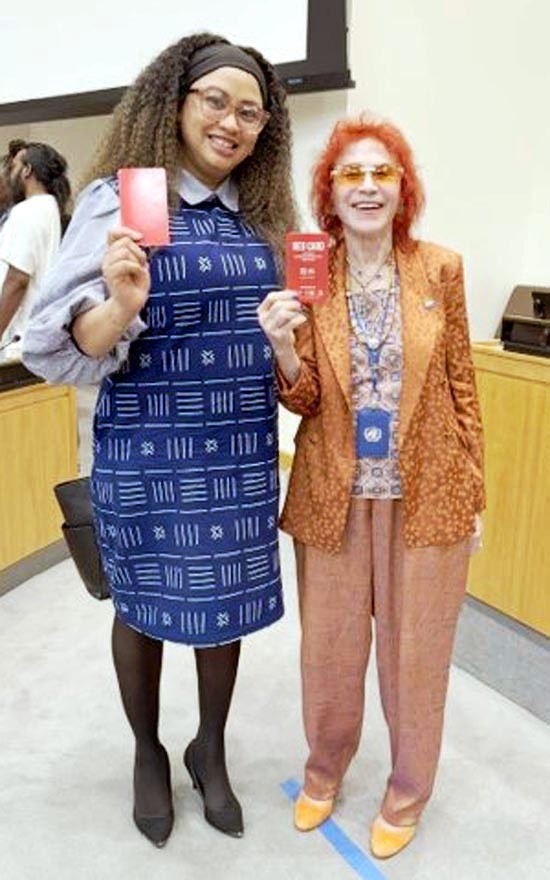
Dr. Judy with
Ambassador Michaela B. E. Swallow |
|
|
Ambassador and
Deputy Permanent Representative for Legal Affairs of Sierra
Leone to the UN, Michaela B. E. Swallow, emphasized how safe
water and sanitation are essential for Africa’s development,
yet hundreds of millions of Africans on the continent lack
access to safe water and basic sanitation services. Water
and sanitation are national priorities for Sierra Leone,
outlined in the country’s National WASH Sector Program
2025-2035, which sets out a vision for achieving a
water-secure and sanitation-safe
Sierra Leone by 2035. |
|
|
 |
|
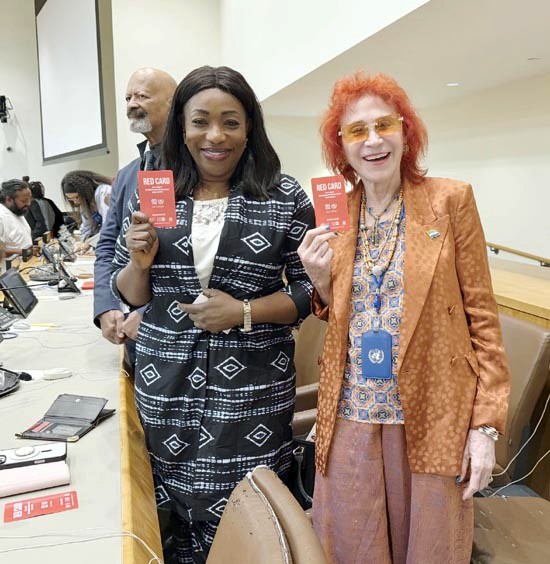
Dr Judy with Fatou Sombie Kabore, a policy
analyst at the African Union Commission on Women, Peace and
Security, a United Nations Security Council Focus expert and
the Focal Person of the African Women Leaders Network at the
Permanent Observer Mission of the African Union to the
United Nations. |
|
|
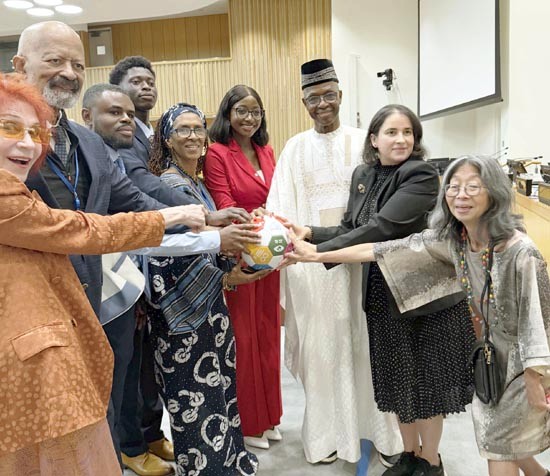 |
Donna Tsufura
(right) – self-described as an “entelechy” agent
facilitating people and institutions to fulfill their
potential -- organizes everyone to take a photo with the
soccer ball emblazoned with emblems of
the UN Sustainable Development Goals. |
|
|
|
Ensuring sustainable
water and sanitation is enshrined in the UN Agenda 2030 for
Sustainable Development in Goal 6. Also, the African Union
(AU) declared 2026 as the Year of "Assuring Sustainable
Water Availability and Safe Sanitation Systems to Achieve
the Goals of Agenda 2063." This theme elevates water and
sanitation to a continental political priority, to achieve
economic transformation, climate resilience, public health,
food security, and regional stability. This theme was voted
on at the annual meeting of the AU, which I witnessed when
attending the annual meeting in Addis Ababa, Ethiopia, last
February. |
|
|
 |
|
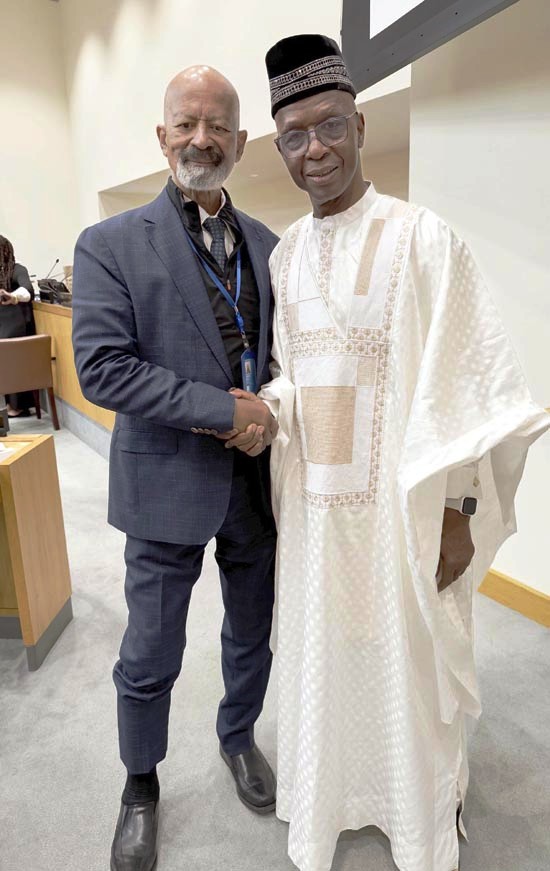
ARDN CEO Dr. Djibril
Diallo with my good friend
Gordon Tapper, Executive Producer of the event |
|
|
 |
|
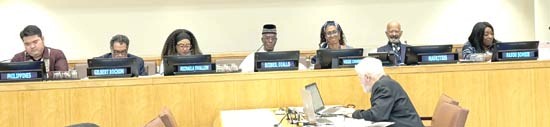
The panel |
|
|
|
Panelists addressed
policy and institutional perspectives as well as initiatives
on the ground, given that the importance of implementations
to accompany policy is increasingly emphasized at the UN.
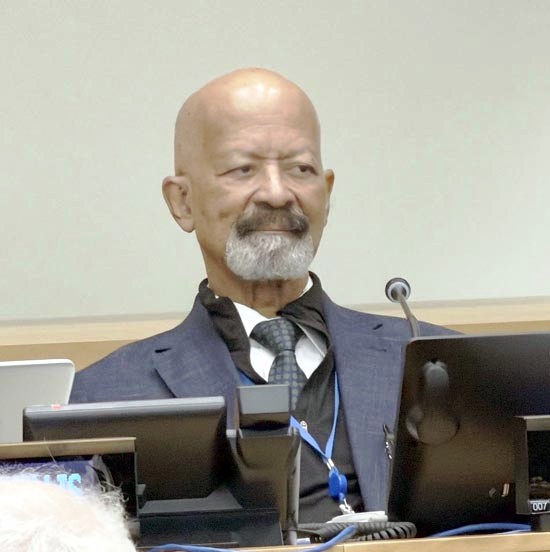
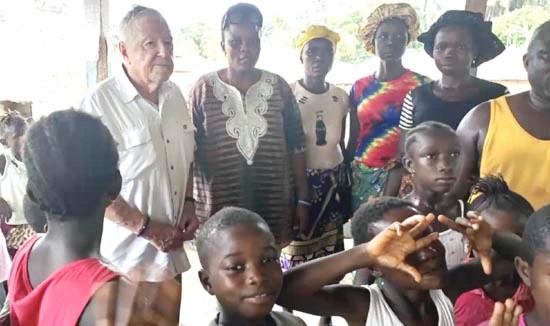
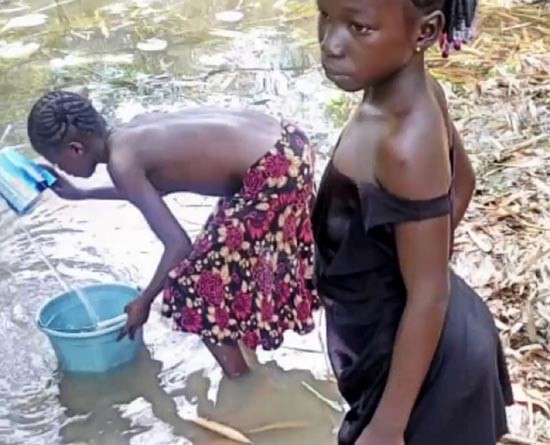
In that regard, ARDN board member and treasurer Mr. Tapper
described a program in a rural community in Sierra Leone
where children have to collect water from a dirty stream to
use for drinking, cooking and washing, and use a
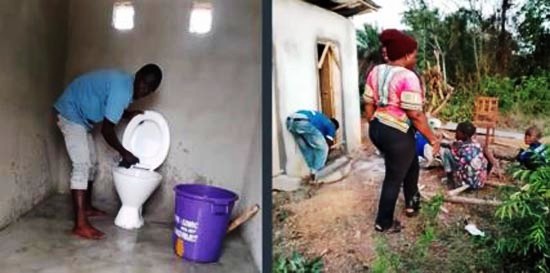
less-than-favorable toilet facility. The project, founded by
his colleague Gary Shultz (who began his commitment to the
country when serving in the Peace Corps in 1961) and with
funding help from Tapper through his Give Them A Hand
Foundation, included installing a latrine with a standard
toilet bowl to replace the usual primitive wooden structure.
The foundation is raising funds to dig a well and furnish it
with an electric pump powered by solar energy. |
|
|
 |
|
Mr. Gordon Tapper |
|
|
 |
|
Gary Shultz
and children in the orphanage he founded |
|
|
 |
|
The unsafe water
source in the village |
|
|
 |
|
The newly
constructed toilet |
|
|
 |
|
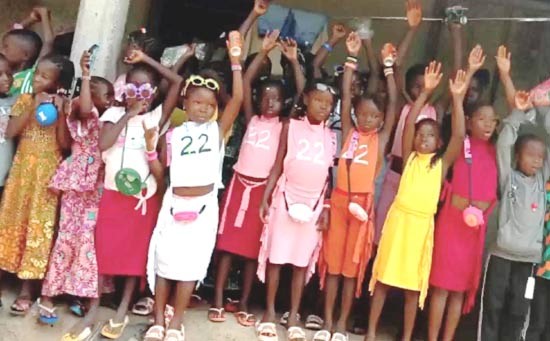
Children at the
orphanage |
|
|
 |
|
|
|
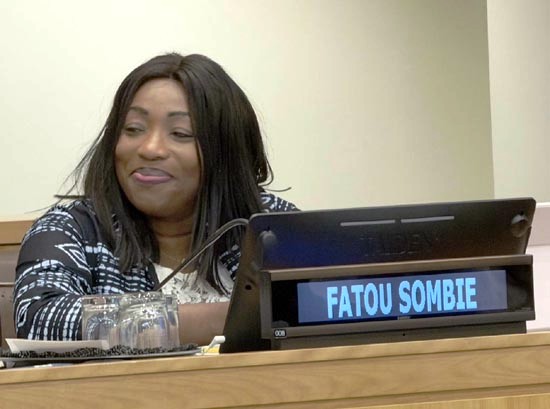
Ms. Fatou Sombie
Kabore, Focal Person of the African Women Leaders Network at
the Permanent Observer Mission of the African Union to the
United Nations, introduced remarks by video of the Special
Envoy of the Chairperson of the African Union Commission on
Women, Peace and Security, Ambassador Liberta Mulamula, who
addressed the interconnections and importance of WASH,
gender equality as in the Red Card campaign, partnerships,
and the upcoming African Open for Business event – all in
efforts to create an “empowered” Africa. |
|
|
 |
|
|
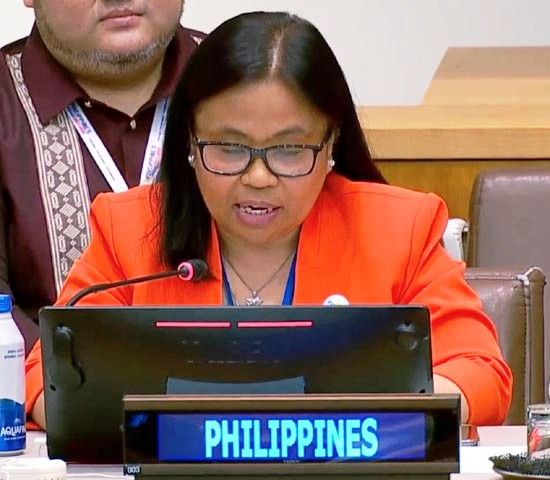
Ambassador Leila C.
Lora-Santos, Assistant Secretary in the Department of
Foreign Affairs in the Philippines, and former Deputy
Permanent Representative of the Philippines to the United
Nations in New York, noted how the Philippines and Africa
share a common history navigating the difficult path from
colonial rule to independence, and emphasized
interconnections, friendship and partnerships between her
country and nations on the continent.
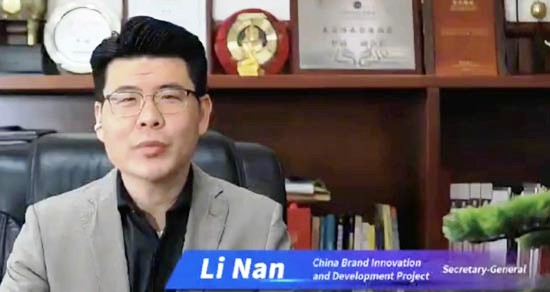
The connection between Africa and China
was highlighted by two video messages.
|
|
|
 |
|
|
Li Nan,
Secretary-General of the China Brand Innovation and
Development Project, described their partnership with Dr.
Diallo on the upcoming celebration of Africa Open for
Business to be held in the fall at the UN headquarters in
New York City. The event will highlight that Africa is
considered as a promising growth market by Chinese
businesses looking to expand internationally.
|
 |
|
|
Martin Wang, founder
and Executive Chair of Global City Connect (GCC) which
promotes global cooperation and sustainable development,
also described bridges between ARDN and China and growing
cooperation between China and Africa. GCC has established
city hubs in multiple countries and is expanding its Africa
cooperation network with the support of Dr. Diallo, who
serves as Chairman of GCC Africa City Hubs. His remarks
echoed those of Mr. Nan that Chinese enterprises are
increasingly interested in long-term partnerships across
Africa. These partnerships involve many areas, including
renewable energy, smart infrastructure, agriculture,
healthcare, industrial development, digital trade, and
transportation. Trust and long-term partnership are
essential, he said, rather than short-term commercial gains.
Brief remarks were offered by the ARDN Goodwill Ambassador
for Music and Culture Abass Mubarak Akenju; Chair of the
ARDN Arts, Sports and Culture Committee, Richard Gant, on
AI’s role in filmmaking; and Frank D. Jackson, Vice
President for International affairs for the World Congress
of Mayors.
The importance of youth participation in Africa’s
development was emphasized throughout the event, including
by panelist educator Gilbert Rochon, co-chair of ARDN’s
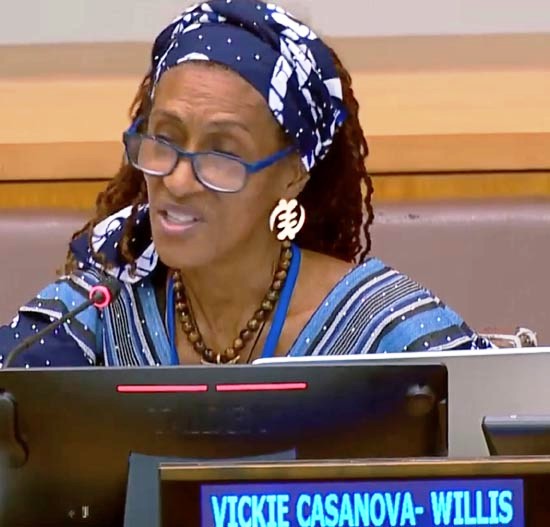
Higher Education Initiative. Moderator Casanova-Willis, also
an educator, emphasized that young people are essential to
drive action and intergenerational collaboration. As such,
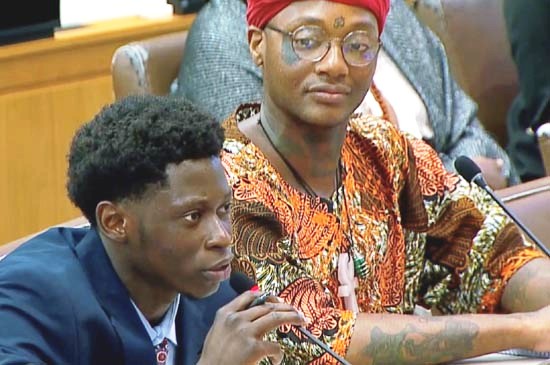
the last segment of the event featured a panel of students
talking about the role of youth as advocates, innovators and
leaders in sustainable development, gender equity, use of
sports, and practical solutions in WASH. |
|
|
 |
|
Moderator Dr.
Vickie Casanova-Willis, a specialist in Global and
Comparative Education, business development, and
intergenerational co-leadership |
|
|
 |
|
Students speaking
during the youth segment |
|
|
|
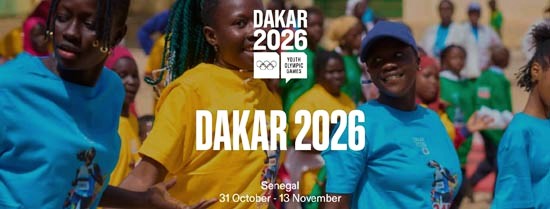
The event served as
a lead-up to the Dakar 2026 Youth Olympic Games, 31
October-13 November, as the first Olympic event ever held on
African soil and an opportunity to showcase Africa’s youth
leadership, creativity, and global engagement. The Diaspora
Youth focal point for the Dakar Youth Olympics described the
“Road to Dakar” with a compelling video. |
|
|
 |
|
|
 |
|
|
|
The event is on UN WebTV at:
https://webtv.un.org/en/asset/k1c/k1c5ws0aqo
|
|
|
|
Bookmark Dr. Judy's Column on Black Tie International
Magazine
https://blacktiemagazine.com/Judy_Kuriansky/Judy_Kuriansky_Main_page.htm
|
|
|
| |
|
| |
|